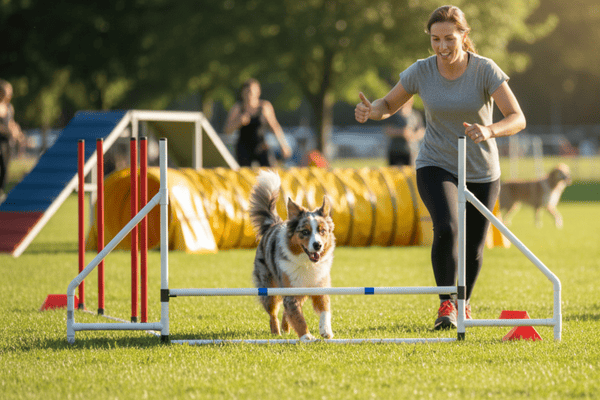
Agility training goes far beyond preparing dogs for competitions. When adapted correctly, it becomes a powerful tool for emotional regulation, focus, and healthy energy release. For anxious beginner dogs, agility can build confidence, strengthen the bond with their owner, and provide structured mental stimulation.
The key is to respect your dog’s pace and create a routine that feels safe, predictable, and positive.
Why Agility Training Helps Anxious Dogs
Anxiety in dogs often appears as excessive barking, destructive behavior, restlessness, difficulty focusing, or fear of new environments. Structured agility sessions help channel that energy into productive and rewarding activities.
Main benefits include:
Channeling excess energy
Structured movement prevents frustration and reduces destructive habits.
Improved emotional control
Gradual exposure to small challenges helps dogs tolerate mild stress without becoming overwhelmed.
Mental stimulation
Agility combines physical coordination with problem-solving, which increases focus and confidence.
Stronger bond with the owner
Positive reinforcement builds trust and improves communication.
If you are looking for additional low-impact activities to complement agility sessions, you may also explore:
https://pautamix.com/low-impact-exercises-small-dogs-apartments/
Combining different types of structured exercise creates better balance for anxious beginner dogs.
Understanding Anxiety Before Starting
Before building a routine, observe your dog carefully. Signs of anxiety may include:
- Excessive panting without physical exertion
- Trembling or avoidance behavior
- Difficulty maintaining eye contact
- Hyperactivity followed by sudden withdrawal
Agility should never increase stress. The goal is gradual confidence building, not performance.
If your dog struggles with flexibility or body awareness, incorporating light stretching beforehand can improve readiness. You can learn safe techniques here:
https://pautamix.com/stretches-for-beginner-dogs/
Stretching before agility helps reduce muscle tension and prepares joints for controlled movement.
Step-by-Step Guide to Building a Routine
1. Choose the Right Environment
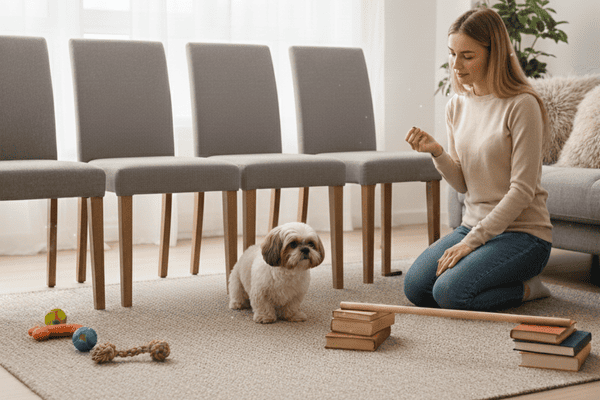
Start in a quiet, controlled space. A living room, backyard, or fenced area works well. Avoid:
- Loud traffic
- Other dogs
- Crowded parks
- Sudden noises
A predictable environment reduces overstimulation and builds trust.
2. Keep Sessions Short
For anxious beginner dogs:
- 5 to 10 minutes per session
- 3 to 4 times per week
Stop before your dog becomes tired or distracted. Ending on a positive note reinforces success.
Consistency matters more than intensity.
3. Use Simple Obstacles
You do not need professional equipment to begin.
Try:
- Plastic bottles or cones for weaving
- A broom supported on books for low jumps
- Chairs and blankets to create tunnels
- Cushions for stepping exercises
Keep obstacles low and stable. Avoid high jumps or unstable surfaces.
Focus on smooth movement rather than speed.
4. Introduce Obstacles Gradually
Do not present multiple challenges at once.
Start with:
- One simple obstacle
- Slow repetition
- Clear verbal cues
Once your dog feels confident, combine two obstacles into a small sequence.
Gradual progression prevents frustration and builds resilience.
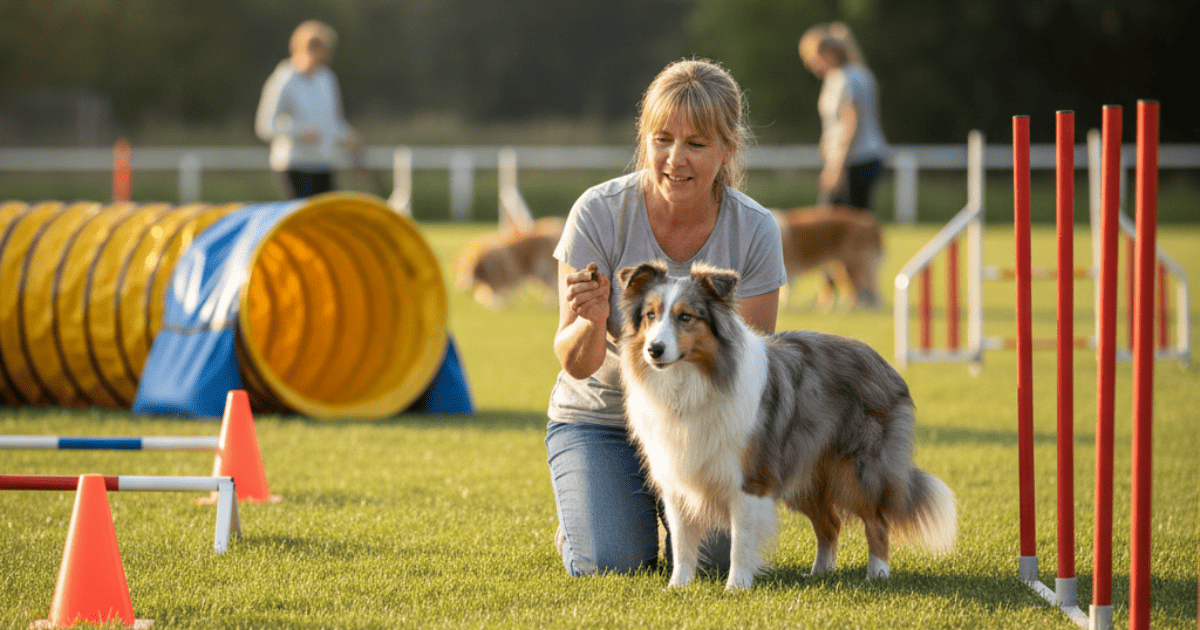
5. Use Positive Reinforcement
Reward every correct attempt with:
- Small healthy treats
- Praise in a calm tone
- A favorite toy
Avoid raising your voice or showing frustration. Anxious dogs respond best to calm, predictable feedback.
Positive reinforcement reduces fear and strengthens motivation.
Special Care for Anxious Beginner Dogs
Certain precautions are essential.
Avoid noisy and crowded environments at first.
Never force your dog to complete the course. Progress must feel natural.
Respect physical limitations, especially in dogs that are older or recovering from previous injuries.
If your dog shows joint sensitivity, consult your veterinarian before introducing jumps or repetitive movements.
Agility should feel empowering, not overwhelming.
Common Mistakes to Avoid
Even well-intentioned owners can make errors that increase stress.
Starting with complex obstacle sequences
Extending sessions too long
Training in overstimulating environments
Ignoring signs of fatigue
Using punishment-based correction
If your dog freezes, avoids obstacles, or shows signs of stress, pause the session and try again another day.
Slow progress is still progress.
How to Measure Improvement
Agility training success is not about speed. It is about emotional balance and engagement.
Signs of positive progress include:
✔ Improved focus during sessions
✔ Reduced anxiety behaviors at home
✔ Willingness to approach obstacles
✔ Relaxed body posture after training
✔ Better response to verbal cues
Confidence develops gradually. Celebrate small achievements.
Indoor vs Outdoor Training
Indoor sessions are ideal at the beginning. They provide:
- Controlled distractions
- Stable surfaces
- Easier supervision
As confidence increases, you may slowly introduce outdoor environments with mild distractions.
Outdoor walks remain essential for socialization and environmental exposure. For professional guidelines on safe canine training practices, you can consult the American Kennel Club recommendations.
Making Training Enjoyable
Agility sessions should feel like interactive play.
To keep motivation high:
- Rotate obstacles
- Change reward types
- Use an enthusiastic but calm tone
- Keep body language relaxed
Finish every session with affection or light play. This reinforces positive emotional association.
The emotional experience matters as much as the physical exercise.
Building Long-Term Confidence
Agility training adapted for anxious beginner dogs becomes more than exercise. It becomes structured emotional therapy.
With patience and consistency, dogs learn:
- To trust their environment
- To rely on their owner for guidance
- To manage mild stress in healthy ways
- To build physical coordination safely
The goal is not perfection. It is confidence.
When agility is introduced gradually and respectfully, it transforms anxious behavior into focused engagement and strengthens the relationship between dog and owner.
Small sessions today create calmer, more confident dogs tomorrow.
Os exemplos abaixo ilustram como criar um ambiente controlado, seguro e positivo para o treino de agility.