

How to Help a Dog with Arthritis Get Up Safely
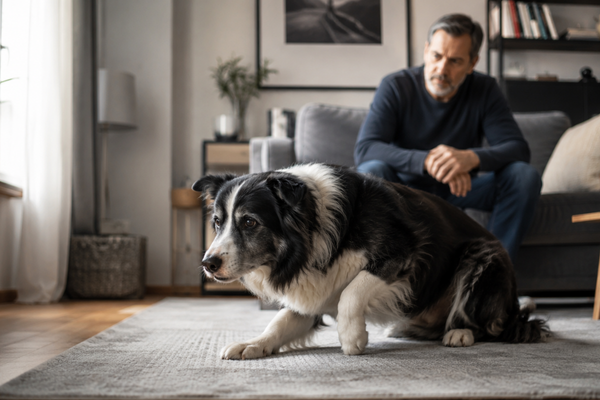
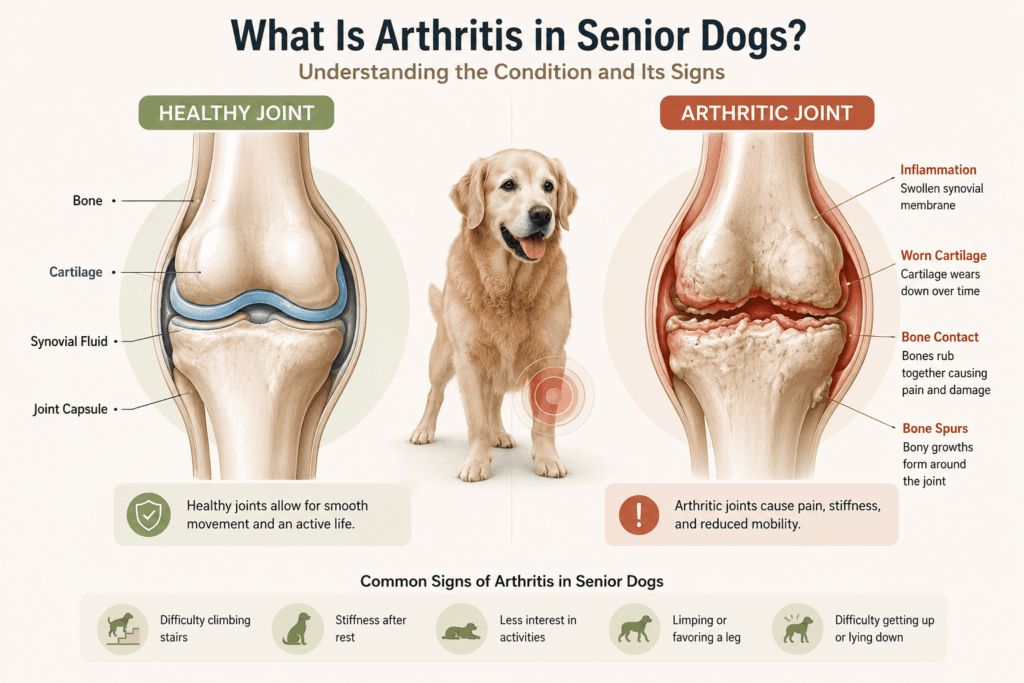
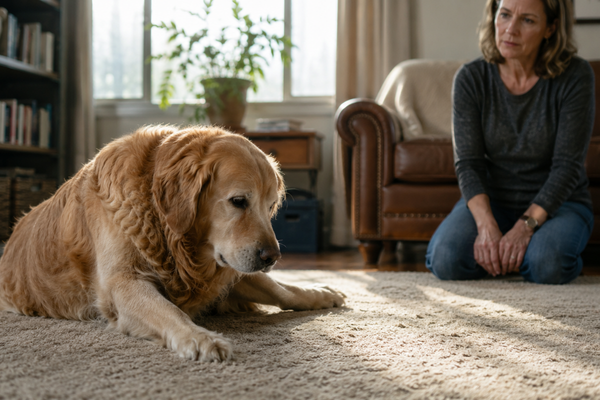
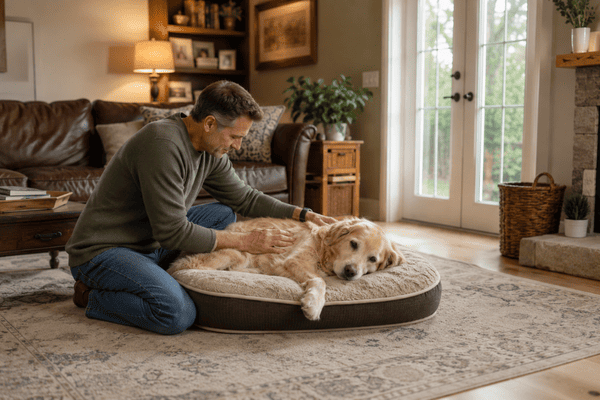
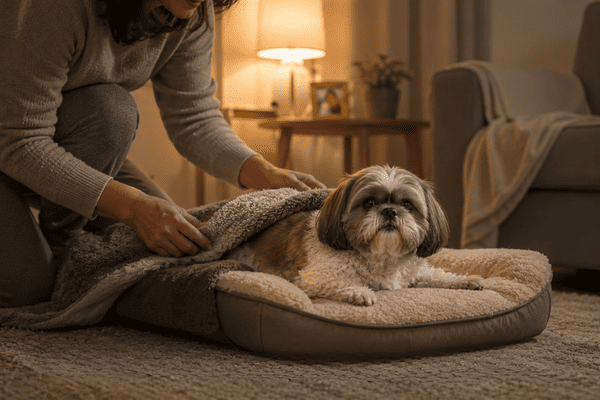
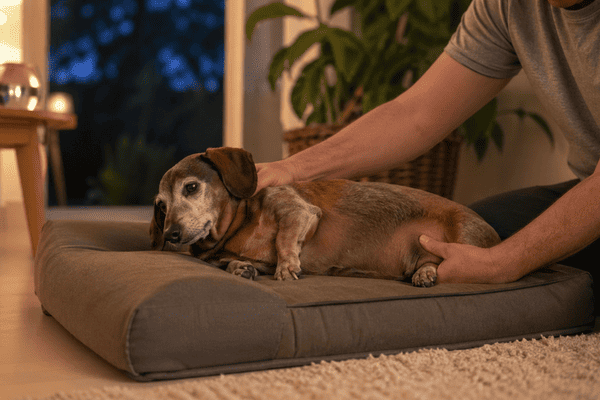
Learn safe, practical ways to help a dog with arthritis get up, reduce joint strain, and make everyday movement more comfortable. Getting up after a long period of rest can be one of the most difficult moments of the day for a dog with arthritis. Joint stiffness, pain, and reduced muscle strength can make a simple movement feel surprisingly challenging. For some dogs, the first attempt to stand involves hesitation, shifting their weight, or trying several times before they find enough stability. Others may rely heavily on their front legs because pushing up with the hind legs has become uncomfortable. Because these changes can develop gradually, it is easy to mistake them for normal aging. However, difficulty getting up is a recognized sign of osteoarthritis and other mobility problems, particularly when it becomes more frequent or noticeably worse. The good news is that thoughtful assistance and a safer home environment can make this daily movement easier. More importantly, the goal is not to lift your dog completely whenever they struggle. Instead, it is to provide the right amount of support while allowing them to move as independently as possible. Why Dogs with Arthritis May Struggle to Get Up Arthritis is a progressive joint condition that can cause pain, inflammation, stiffness, and reduced mobility. After lying down for an extended period, some dogs may find it particularly difficult to move their joints comfortably. Muscle weakness can add another challenge. When a dog becomes less active because movement hurts, maintaining normal muscle strength becomes harder. Over time, this combination of joint discomfort and reduced strength can make standing increasingly difficult. You may notice that your dog: These changes do not necessarily mean that your dog needs to be lifted every time. Instead, they are useful signals that can help you understand when additional support or a veterinary assessment may be appropriate. What Is the Safest Way to Help a Dog with Arthritis Stand Up? The safest approach is to encourage controlled movement while providing gentle support when your dog genuinely needs it. Avoid pulling your dog by the legs, collar, or tail. Sudden lifting can place unnecessary stress on painful joints. Instead, help stabilize the body and give your dog a secure surface from which to push up. A non-slip floor is particularly important because slipping can make it much harder for a dog with arthritis to rise safely. Veterinary guidance for dogs with osteoarthritis commonly includes improving traction around the home and using appropriate assistive devices when necessary. Step-by-Step: How to Help Your Dog Get Up Safely A calm and consistent approach can make this everyday movement much less stressful. 1. Give Your Dog Time to Prepare First, avoid rushing your dog. After resting, allow a few moments for your dog to reposition the body before attempting to stand. A calm voice can encourage movement without creating pressure. You might gently call your dog’s name or use a familiar cue. If your veterinarian has recommended treats as part of your dog’s routine, a small reward can also encourage controlled movement. Most importantly, let your dog set the pace. If they appear painful or repeatedly fail to stand, do not force the movement. 2. Support the Body Instead of Pulling the Legs When assistance is needed, focus on stabilizing the body rather than dragging or lifting individual limbs. Avoid pulling on the collar or trying to lift your dog by the front legs. Instead, depending on your dog’s size and your veterinarian’s recommendations, you may provide gentle support around the chest or use an appropriate mobility-support device. The exact technique should depend on your dog’s size, condition, and mobility limitations. A veterinarian or canine rehabilitation professional can show you the safest way to assist your individual dog. 3. Consider a Mobility Support Harness For dogs that regularly struggle with standing, a properly fitted mobility harness may provide useful assistance. A support device can help you stabilize your dog while allowing them to participate in the movement rather than being completely lifted. Some dogs benefit from occasional assistance devices such as supportive harnesses or slings as part of a broader mobility plan. 📌 [IMAGE 1 – INSERT HERE] A properly fitted support harness can make difficult movements easier while allowing your dog to participate. 🔗 Benefits of Using Support Vests for Dogs with Arthritis 4. Create Better Traction Under Your Dog Sometimes the problem is not simply getting up. It is getting enough grip to push against the floor. Smooth surfaces such as tile, polished wood, or laminate can make standing more difficult for dogs with mobility problems. As a result, your dog may spread the legs, hesitate, or repeatedly lose traction. Place a non-slip rug or runner where your dog usually rests and in the areas they cross frequently. Make sure the material lies flat and does not have raised edges that could become another tripping hazard. Veterinary guidance specifically recommends improving traction in areas where dogs with osteoarthritis need to rise and walk. 🔗 How to Prepare Your Home for a Senior Dog with Arthritis 5. Keep Your Dog Comfortable and Warm Cold and damp conditions may contribute to greater stiffness in dogs with osteoarthritis. Therefore, keeping your dog warm and dry can be a useful part of overall comfort management. A comfortable orthopedic bed can provide better support than a hard floor. Likewise, keeping the resting area away from cold drafts can make the transition from rest to movement more comfortable. However, avoid applying excessive heat directly to painful joints unless your veterinarian has specifically recommended a particular method. Comfort should never come at the expense of safety. When Should You Help Your Dog Stand? Not every slow movement requires physical assistance. Some dogs simply need additional time to reposition themselves and rise independently. In fact, maintaining controlled movement is generally an important part of managing osteoarthritis because regular, appropriate activity helps preserve muscle strength and joint mobility. Therefore, think of assistance as support rather than replacement for movement.