Learn how to recognize the right moments to encourage movement or allow rest without increasing pain or stiffness
There’s a moment that almost every dog owner recognizes.
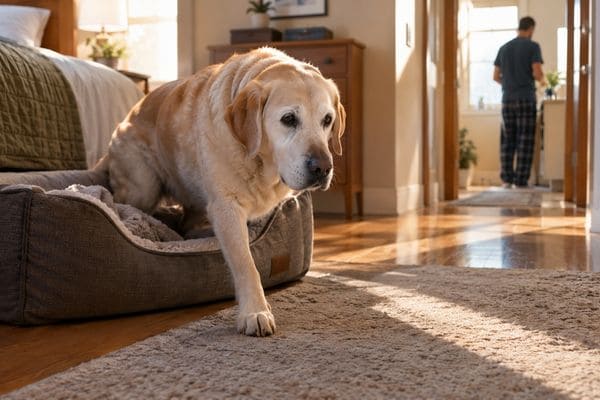
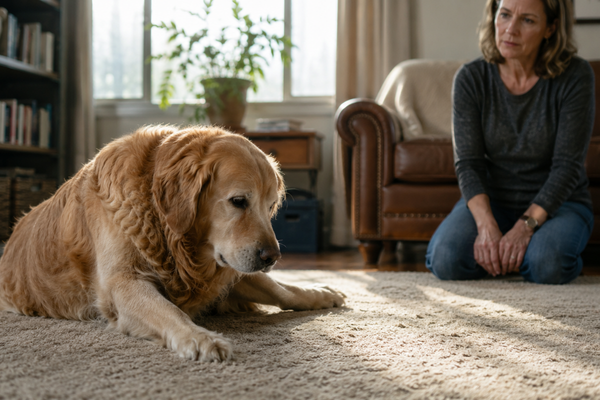
Your dog is lying down, watching you… but not moving.
They try to get up — then stop.
You hesitate.
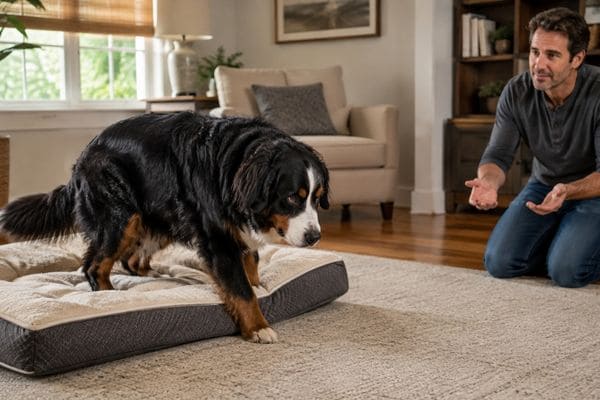
Should you help? Encourage them? Or give them time?
That uncertainty matters more than it seems. Because in dogs with arthritis, timing is everything.
Helping at the wrong moment can increase discomfort. Waiting too long can lead to stiffness.
Learning to read these moments is one of the most valuable ways to truly support your dog.
🐕 Should You Encourage a Dog with Arthritis to Walk?
Yes — but only when movement feels natural, not forced.
Gentle activity plays an important role in:
- Maintaining joint mobility
- Reducing stiffness
- Supporting circulation
However, timing is critical.
Encouraging movement when your dog is not ready can:
- Increase pain
- Create hesitation
- Reduce confidence in moving
The real question is not if your dog should move —
it’s when movement feels right for them.
⚠️ Signs Your Dog Needs Help to Move
There are moments when assistance makes a real difference.
Watch for these signals:
- Repeated attempts to stand without success
- Stiffness that doesn’t ease after a few seconds
- Visible imbalance or hesitation
- Looking at you for support
- Remaining in place longer than usual despite trying
When you notice these signs, gentle support can reduce strain and frustration.
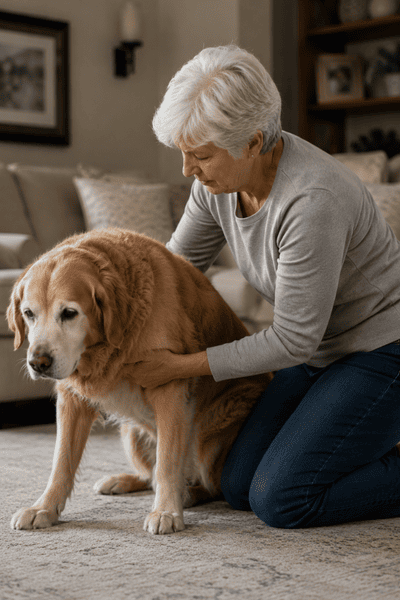
Gentle support can help your dog move without adding stress to the joints
Benefits of using support vests for dogs with arthritis
🔗Benefits of Using Support Vests for Dogs with Arthritis
🛑 Signs Your Dog Should Rest Instead
Sometimes, the best support is doing nothing.
Encouraging movement at the wrong time may worsen inflammation and discomfort.
Pay attention to:
- Tension when attempting to move
- Avoidance after recent activity
- Frequent repositioning while lying down
- Slower breathing or visible fatigue
- Subtle signs of pain (ears back, reduced eye contact)
In these moments, rest is not inactivity —
it’s recovery.
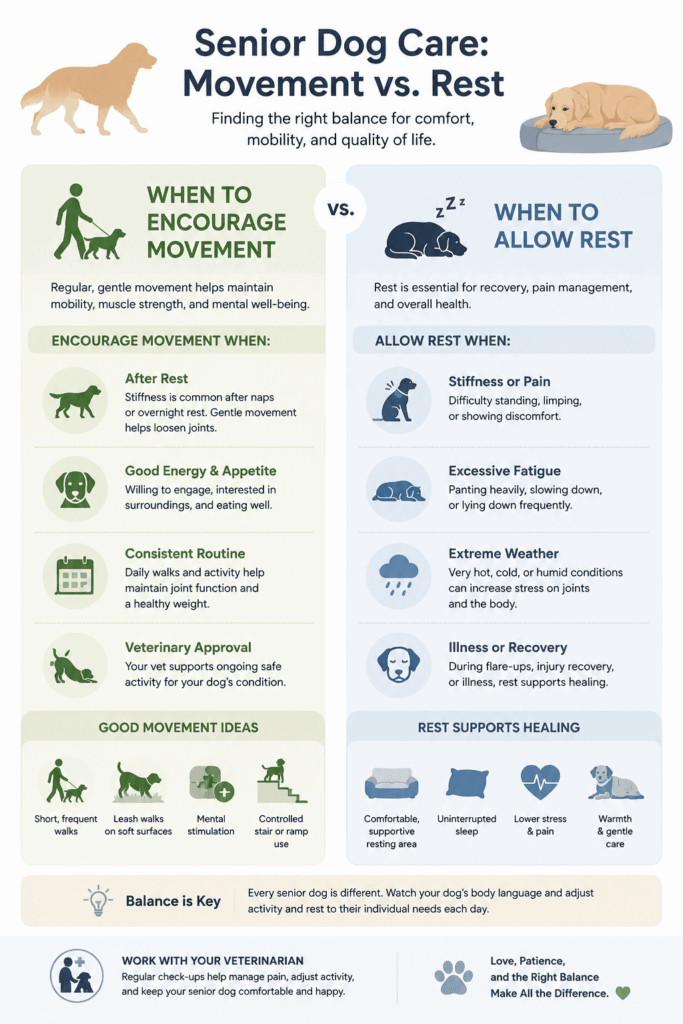
📊 Movement vs Rest: Finding the Right Moment
📊 [INFOGRAPHIC – INSERT HERE]
⚖️ The Risk of Doing Too Much
Over-encouraging movement can create a negative cycle.
When movement leads to discomfort, dogs begin to associate activity with pain.
Over time, this may result in:
- Avoidance of movement
- Increased stiffness
- Faster mobility decline
Short, supported movement is always better than pushing beyond comfort.
🧊 The Risk of Doing Too Little
On the other side, too much rest has its own consequences.
Without regular movement:
- Joints become stiffer
- Muscles weaken
- Mobility decreases more quickly
Balance is more important than intensity.
What is the best daily routine for a dog with arthritis
🔗What Is the Best Daily Routine for a Dog with Arthritis?
🧠 How to Find the Right Balance
There is no fixed formula — but patterns tell you everything.
Start observing:
- Does your dog move better after short walks?
- Do they resist movement after specific activities?
- Is stiffness worse in the morning or evening?
These small details help you adjust naturally.
Consistency matters more than perfection.
🐾 Small Ways to Support Movement Safely
When your dog needs help, keep everything calm and controlled:
- Support the body instead of lifting abruptly
- Let your dog set the pace
- Avoid slippery floors
- Use soft, stable surfaces
- Keep sessions short and gentle
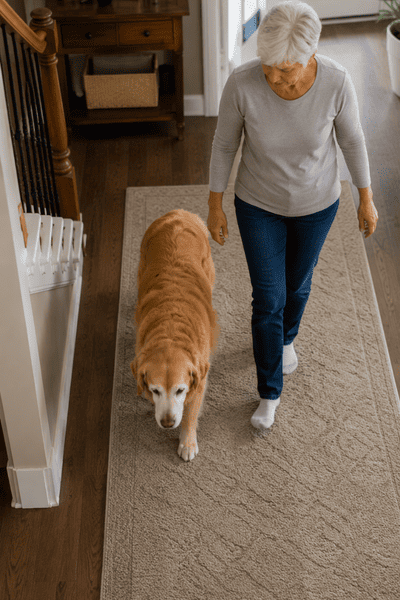
A safe environment can make movement easier and more confident
Helping a dog with arthritis is not about doing more —
it’s about doing the right thing at the right moment.
Sometimes that means encouraging a few steps.
Other times, it means simply being there… and letting them rest.