
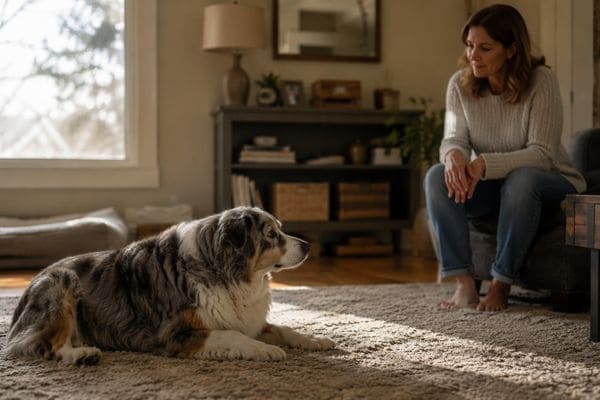
When something feels off, it usually is
There is a moment every dog owner recognizes.
You look at your dog and feel that something has changed. Not dramatically. Not suddenly. Just… different.
Maybe they hesitate before getting up.
Maybe they don’t greet you with the same energy.
Maybe they pause halfway through a walk that used to excite them.
These are not random changes.
Dogs age quietly. And when pain appears, they rarely show it in obvious ways. Instead of crying or complaining, they adjust their behavior.
That is why recognizing subtle signals matters so much.
1. Difficulty getting up or lying down

One of the earliest and most overlooked signs of pain is hesitation in movement.
A dog that once jumped up easily may now pause, shift weight, or take longer to stand. This is often linked to joint discomfort, especially in hips and legs.
It may seem small at first. But over time, this hesitation becomes more frequent.
Creating a more comfortable environment can already make a difference. Softer bedding, warmer resting areas, and minimizing slippery surfaces can reduce strain significantly.
👉 Read more:
How to Recognize Signs of Pain in Senior Dogs with Arthritis
2. Loss of interest in walks or play
Changes in energy are often misunderstood.
What looks like “slowing down” may actually be your dog avoiding discomfort.
A walk that used to be exciting becomes something they tolerate. Playtime becomes shorter. Movements become more cautious.
Dogs do not stop enjoying life without a reason. When they withdraw from activities they love, there is usually something behind it.
Pay attention to patterns. Does your dog stop more often during walks? Do they lag behind? Do they resist leaving the house?
These are not personality changes. They are signals.
👉 Related:
Safe Walks for Senior Dogs with Arthritis: Keep Your Dog Active
3. Subtle behavioral changes
Pain doesn’t only affect the body. It changes how your dog interacts with the world.
A social dog may become distant.
A calm dog may become irritable.
A loving dog may avoid touch.
These shifts can feel confusing, especially when they happen gradually.
But discomfort creates stress. And stress changes behavior.
Instead of interpreting this as mood or aging alone, it is important to consider what your dog might be experiencing physically.
4. Repetitive licking in one area
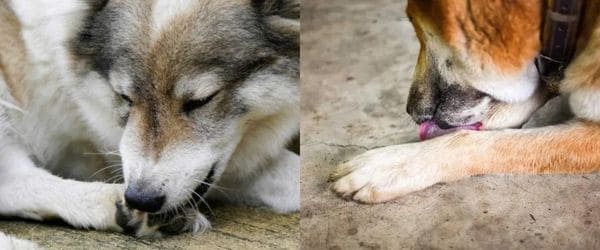
Dogs have a natural instinct to soothe pain through licking.
When this behavior becomes frequent or focused on a specific area, it usually means something is wrong.
It could be inflammation, joint pain, or even internal discomfort reflected externally.
This is one of the clearest physical signs because it shows exactly where the problem might be.
5. Avoiding stairs, jumping, or certain movements
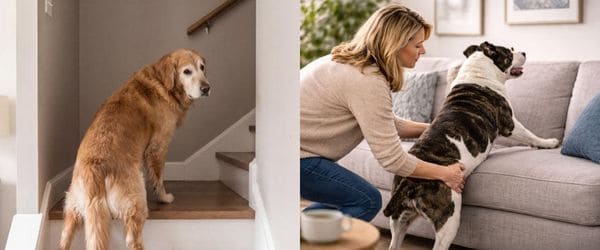
Movement avoidance is not random.
Dogs quickly learn which actions cause discomfort and start avoiding them.
If your dog stops jumping onto the couch or hesitates near stairs, it is not a coincidence.
These small adjustments in behavior are often early warnings of deeper mobility issues.
Simple changes in your home can help immediately. Ramps, lower resting areas, and easier access to favorite spots can reduce daily strain.
👉 Recommended solutions:
Ramps vs. Stairs for Senior Dogs: Which One Is Better for Arthritis and Mobility Issues?
6. Changes in eating habits
Appetite is closely connected to well-being.
A dog in pain may eat less, take longer to finish meals, or lose interest in food altogether.
This does not always mean digestive issues. Pain reduces energy, affects mood, and can make even simple actions feel exhausting.
If eating behavior changes together with other signs, it deserves attention.
7. Restlessness or difficulty relaxing
Pain often becomes more noticeable during rest.
You may notice your dog changing positions frequently, struggling to get comfortable, or panting without a clear reason.
Nights can become more restless. Sleep becomes lighter. Relaxation becomes harder.
These are signs that discomfort is persistent, not occasional.
What you can start doing today
Helping your dog does not always require drastic changes.
In many cases, small adjustments create immediate relief.
Start by observing patterns. Notice when discomfort appears and what seems to trigger it.
Then focus on comfort:
- Improve resting areas
- Reduce impact and strain
- Make daily movement easier
Most importantly, do not ignore the signals.
Understanding what your dog is going through is the first step toward improving their quality of life.
👉 Start here:
How to Prepare Your Home for a Senior Dog with Arthritis
Your dog is communicating, just not with words
Dogs do not complain.
They adapt. They adjust. They stay quiet.
But they are always communicating.
Every hesitation, every behavior change, every small shift is a message.
And when you learn to read those messages, you give your dog something incredibly valuable.
Comfort. Care. And a better life in the years that matter most.