
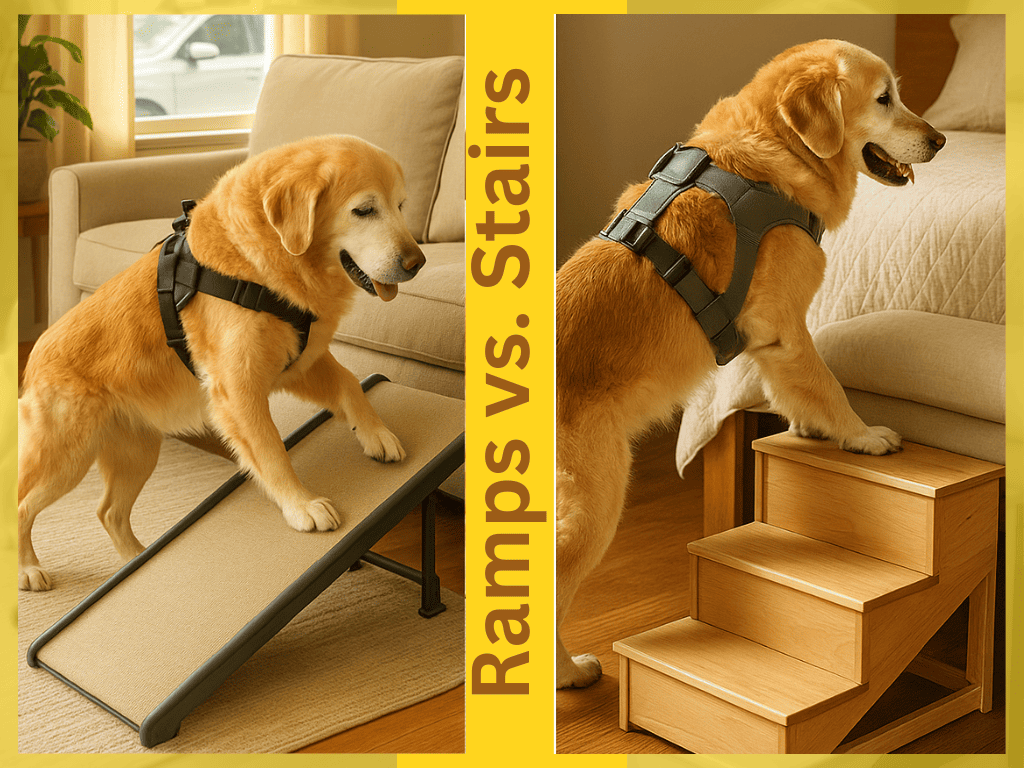
Discover whether ramps or stairs are the safest and most comfortable solution for senior dogs with arthritis and mobility challenges.
As dogs age, mobility issues such as arthritis, joint stiffness, or leg weakness can make everyday activities—like jumping onto the couch, getting into the car, or lying on the bed—difficult or risky.
Pet owners are increasingly turning to mobility devices to support their senior dogs’ independence and safety. Ramps and stairs are two popular options that reduce joint strain and prevent injuries, but the right choice depends on your dog’s needs.
This article compares ramps and stairs, highlighting their benefits and helping you decide which is best for your aging pet. For additional home safety tips, explore the 5 best non-slip rugs for dogs with arthritis.
Why Mobility Aids Are Essential for Senior Dogs
Aging brings physical limitations for dogs, including arthritis, hip dysplasia, and muscle loss, which can hinder movements involving elevation. Jumping or climbing without support often leads to falls or worsening joint damage.
- Key Benefits of Using Ramps or Stairs:
- Reduced Joint Stress: Minimizes impact on hips, knees, and spine, easing arthritis pain.
- Injury Prevention: Lowers the risk of sprains, slips, or falls from high surfaces like beds or cars.
- Greater Independence: Allows dogs to access favorite spots without constant lifting.
- Improved Quality of Life: Encourages gentle movement, boosting confidence and mobility.
- Example: A 12-year-old Labrador with arthritis may struggle to jump onto a 2-foot-high bed, risking a fall that could worsen joint issues.
Mobility aids are a proactive way to support your senior dog’s health and happiness.
Best Use Cases for Dog Ramps
Dog ramps are sloped surfaces offering a smooth, gradual incline, making them ideal for dogs with significant mobility challenges.
Ideal for Dogs with Arthritis or Reduced Mobility
Dogs with arthritis, spinal conditions, or leg injuries often struggle to lift their legs on stairs, making ramps a gentler alternative.
- Benefit: Eliminates the need to jump or step up, reducing stress on joints and muscles.
- Tip: Pair with non-slip mats or rugs (e.g., from the 5 best non-slip rugs for dogs with arthritis) for added traction.
- Example: A Dachshund with intervertebral disc disease (IVDD) can use a ramp to access a car trunk without straining its back.
Lightweight and Durable Material Options
Modern ramps cater to various needs with portable, sturdy designs:
- Wood: Durable for permanent indoor use (e.g., next to beds), like the Petsfit Wooden Pet Ramp (supports up to 120 lbs, carpeted for grip).
- Aluminum: Lightweight and rust-resistant, ideal for car access (e.g., PetSafe Happy Ride Telescoping Ramp, rated for 150 lbs).
- Reinforced Plastic: Affordable and water-resistant, suitable for indoor/outdoor use (e.g., PetSafe Happy Ride Extra Long Ramp, 87 inches, 200 lbs capacity).
- Tip: Select a ramp rated 1.5–2 times your dog’s weight for safety and durability.
Space Considerations
Ramps require more floor space due to their incline, but many fold or telescope for storage.
- Tip: A telescopic ramp like the PetSafe Happy Ride adjusts from 39 to 87 inches, perfect for tight spaces or travel.
- Example: A foldable ramp can be stored under a bed when not in use, saving room in a small apartment.
Ramps are a versatile choice for dogs needing a low-impact solution.
When Dog Stairs Are a Better Fit
Dog stairs are compact step systems designed for pets with mild mobility issues who can still navigate steps with support.
Support for Dogs with Mild Mobility Issues
Stairs suit dogs with decent leg strength who are familiar with household steps but need assistance.
- Benefit: Offers controlled stepping without jumping, reducing strain on aging joints.
- Tip: Opt for stairs with low, wide steps (e.g., Petsfit Wooden Pet Stairs, 2–3 steps, 150 lbs capacity).
- Example: A 10-year-old Beagle with early arthritis can use stairs to reach a couch with minimal effort.
Compact Design for Small Spaces
Stairs take up less room than ramps, making them ideal for apartments or homes with limited space.
- Benefit: Fits neatly beside furniture without obstructing walkways.
- Tip: Choose foldable models like the Tail Waggers Flexi-Step (4 steps, foldable, medium size) for easy storage.
- Example: A foldable stair set can be tucked under a sofa in a cramped living room.
Soft, Cushioned Steps for Comfort
Many stairs feature padded or carpeted steps, cushioning joints and improving grip.
- Benefit: Soft surfaces reduce impact and prevent slipping on sore paws.
- Tip: Look for anti-slip treads, as seen on the Dextrus 3-Step Pet Stairs.
- Example: A senior dog with stiff knees can use cushioned steps to avoid jarring landings.
Stairs are a practical option for dogs with mild limitations and space constraints.
How to Train Your Dog to Use a Ramp or Stairs
Introducing a mobility aid requires patience to ensure your dog feels secure.
Start Slow and Be Patient
Allow your dog to explore the aid at their own pace near a familiar spot.
- Tip: Place the ramp or stairs next to their bed with treats scattered to encourage investigation.
- Benefit: A gradual approach prevents fear and builds confidence over days or weeks.
Use Positive Reinforcement
Motivate your dog with treats, toys, or praise for each successful step.
- Tip: Reward small progress (e.g., one paw on the ramp) to reinforce learning.
- Benefit: Creates a positive association, speeding up adaptation. See physical therapy for senior dogs: how it helps manage arthritis for more training tips.
- Example: Use chicken treats to guide a hesitant dog up a ramp, praising each step.
Check for Stability
Ensure the aid is secure before use to avoid wobbles or slips.
- Tip: Test with your weight or add rubber grips if needed.
- Benefit: A stable surface prevents falls, boosting your dog’s trust.
- Example: Secure a wobbly stair set with non-slip pads before training begins.
Extra Tip: Stay Consistent and Calm
Some dogs need weeks to adjust. Keep sessions short (5–10 minutes) and remain calm to avoid stress. With consistency, even reluctant dogs can master their new aid.
How to Choose the Right Option for Your Dog
The decision between ramps and stairs hinges on your dog’s health, size, and living space.
Evaluate Your Dog’s Needs
- Weight and Size: Check product weight limits (e.g., PetSafe ramps support up to 200 lbs).
- Health Condition: Severe arthritis or IVDD favors ramps; mild issues suit stairs.
- Observation Tip: Note if your dog hesitates at stairs or limps after jumping.
- Example: A 70-pound dog with hip dysplasia may need a sturdy ramp over narrow stairs.
Consider Your Home Environment
- For Couches and Beds: Short ramps (e.g., 40-inch Petsfit) or 2–3 step stairs work best.
- For Vehicles: Telescoping ramps (e.g., PetSafe Happy Ride) are easier to store and use.
- Tip: Measure heights (e.g., bed at 24 inches) to match the aid’s reach.
- Example: A car with a 3-foot entry needs a long, adjustable ramp.
Talk to a Veterinarian or Specialist
A vet can recommend the best option based on your dog’s condition.
- Benefit: Professional input ensures safety and effectiveness.
- Tip: Ask about brands like PetSafe or custom solutions for unique needs.
- Example: A vet might suggest a ramp for a dog with severe arthritis, paired with a harness for support.
For more gear recommendations, check best leashes and collars for dogs with arthritis – part 2 (slug:/best-leashes-collars-dogs-arthritis-part-2).
Frequently Asked Questions
Are ramps or stairs better for severe arthritis?
Ramps are generally better for severe arthritis due to their gentle incline, reducing joint stress compared to stepping.
How long does training take?
Training can take a few days to a few weeks, depending on your dog’s confidence and health.
Can I use both ramps and stairs?
Yes, some owners use stairs indoors and ramps for cars, depending on the situation and space.
Conclusion
Ramps and stairs are vital tools for enhancing the lives of senior dogs with arthritis or mobility issues, offering safety, reduced joint strain, and independence. Ramps suit dogs with severe limitations, providing a smooth incline with options like the PetSafe Happy Ride, while stairs work for milder cases with compact designs like the Petsfit Wooden Stairs.
The best choice depends on your dog’s health, your home layout, and their comfort level—guided by patience and possibly a vet’s advice. By investing in the right mobility aid, you’re ensuring your aging companion enjoys a comfortable, active life by your side. Share your experience with ramps or stairs in the comments!