

Simple ways to reduce nighttime discomfort and improve your senior dog’s sleep quality
Helping a senior dog with arthritis sleep well can be challenging. Many dogs experience increased discomfort at night, especially after long periods of inactivity.
The good news is that small adjustments in your dog’s environment and routine can significantly improve comfort and sleep quality.
Why Dogs with Arthritis Struggle to Sleep
Arthritis causes inflammation in the joints, leading to pain, stiffness, and difficulty finding a comfortable position.
At night, these symptoms often become more noticeable due to:
- Reduced movement over time
- Cooler temperatures
- Constant pressure on sensitive joints
- Difficulty changing positions
Choose the Right Bed for Maximum Comfort
One of the most important changes you can make is upgrading your dog’s bed.
Standard beds often lack the support needed for aging joints. Orthopedic beds help distribute body weight more evenly and reduce pressure points.
Best orthopedic beds for dogs with arthritis
🔗Best Orthopedic Dog Beds for Senior Dogs with Arthritis
What to look for in a good bed:
- High-density foam or memory foam
- Firm yet comfortable support
- Easy access without jumping
- Enough space for your dog to stretch
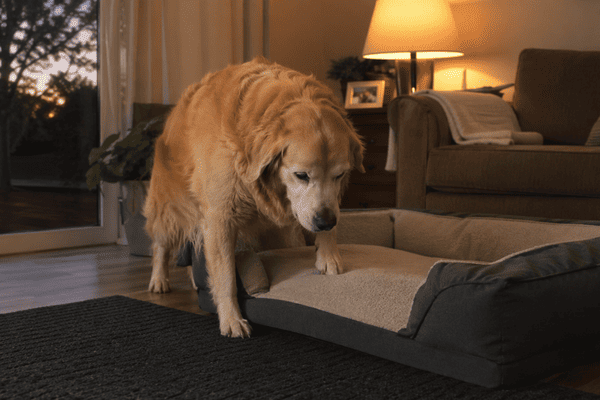
Improve the Sleeping Environment
Your dog’s sleeping area plays a major role in overall comfort.
A few simple adjustments can make a big difference.
Key improvements:
- Avoid cold or hard floors
- Keep the temperature stable and warm
- Reduce drafts in the sleeping area
- Use non-slip rugs near the bed
How to adapt your home for a senior dog
🔗Ideal Environment: How to Adapt Your Home for a Senior Dog with Arthritis
Help Your Dog Lie Down and Get Up Safely
Dogs with arthritis often struggle with the physical effort of lying down and getting up.
This can increase pain and make them reluctant to rest.
How to help:
- Place the bed in an easy-to-access location
- Avoid slippery surfaces nearby
- Provide gentle support if needed
Adjust your dog’s daily routine for better rest
🔗How to Adjust the Care Routine for Senior Dogs with Arthritis
Create a Calm and Consistent Night Routine
A predictable routine helps your dog relax and feel secure.
Consistency reduces stress and can lower the perception of pain.
Recommended routine:
- A short, gentle walk in the evening
- Quiet time before bed
- A calm and low-noise environment
- A consistent bedtime schedule
Avoid intense activity late at night.
Adjust Temperature for Joint Comfort
Temperature has a direct impact on arthritis symptoms.
Cold environments can increase stiffness and discomfort.
Tips:
- Use light blankets during colder nights
- Keep your dog off cold surfaces
- Choose a warm and cozy sleeping spot
Encourage Gentle Movement Before Bed
Light movement before bedtime can help reduce stiffness and improve circulation.
This makes it easier for your dog to relax and settle down.
Good options:
- Short walks
- Gentle stretching
- Slow, guided movements
Avoid any high-impact activity.

When to Talk to a Veterinarian
If your dog continues to struggle with sleep, it may be a sign that pain is not fully controlled.
A veterinarian can recommend:
- Pain management adjustments
- Physical therapy options
- Joint-support supplements
How to manage chronic pain in dogs with arthritis
🔗https://caninearthritis.co.uk/home-pet-guardians/
Small Changes Can Make a Big Difference
Helping a dog with arthritis sleep comfortably does not require complex changes.
With the right bed, a supportive environment, and a calming routine, you can greatly improve your dog’s quality of life.
Pay attention to your dog’s behavior and adjust as needed. Small improvements often lead to meaningful results.