Simple, practical ways to ease discomfort and help your senior dog feel safe, supported, and calm during difficult moments
Watching your dog struggle during an arthritis flare-up can be one of the most difficult moments for any owner. The hesitation to move, the stiffness, and the subtle signs of discomfort often appear suddenly, changing the rhythm of the entire day.
In these moments, what your dog needs most is not just pain relief, but reassurance, safety, and gentle support.
Understanding Arthritis Flare-Ups in Dogs
Arthritis does not behave the same way every day. Many dogs experience flare-ups, moments when pain and stiffness become more intense and noticeable.
These episodes can be triggered by colder temperatures, physical overexertion, or even subtle changes in routine that go unnoticed at first.
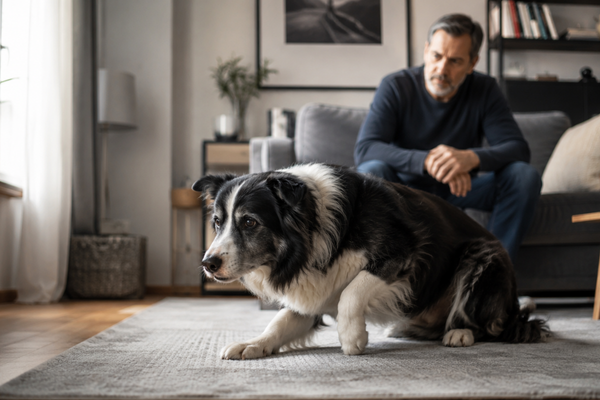
During a flare-up, your dog may begin moving more slowly, hesitate before standing, or avoid stairs altogether. Some dogs become sensitive to touch, while others grow unusually quiet or restless, shifting positions frequently in search of comfort.
Recognizing these early signals allows you to respond with confidence and care.
Signs of pain in senior dogs with arthritis.
🔗 How to Recognize Signs of Pain in Senior Dogs with Arthritis
What Helps a Dog During an Arthritis Flare-Up?
The most effective way to help a dog during an arthritis flare-up is to create a calm, warm, and safe environment, reduce physical strain, offer gentle support, and maintain a consistent routine that helps your dog feel secure.
Create a Calm and Safe Resting Space
When discomfort increases, your dog naturally looks for a place to rest. The environment you provide can either ease tension or make it worse.
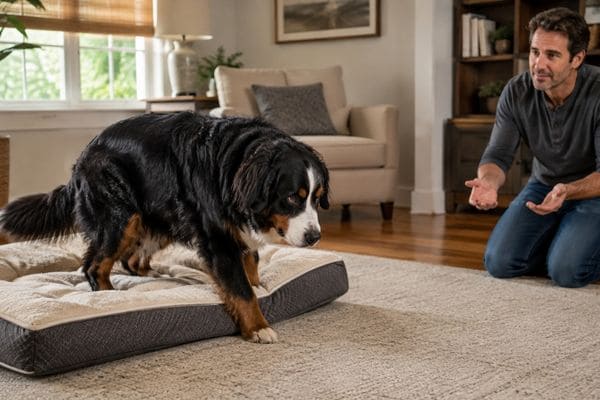
A good resting space feels predictable and easy to access. Quiet areas away from constant movement or noise help your dog relax more deeply. Soft, supportive bedding reduces pressure on sensitive joints, while a warm environment helps muscles loosen naturally.
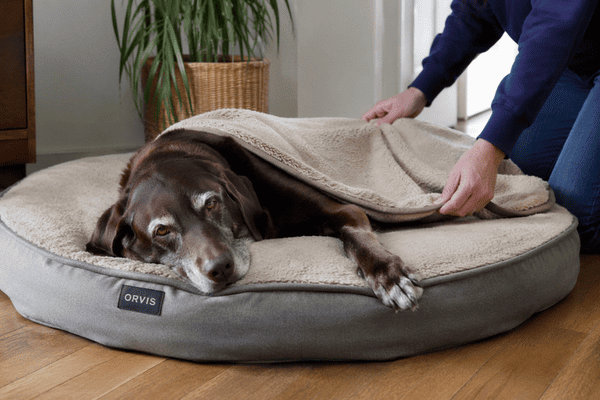
A warm and supportive resting space helps reduce joint pressure
Use Gentle Physical Comfort
Physical contact can be incredibly soothing when done with care.
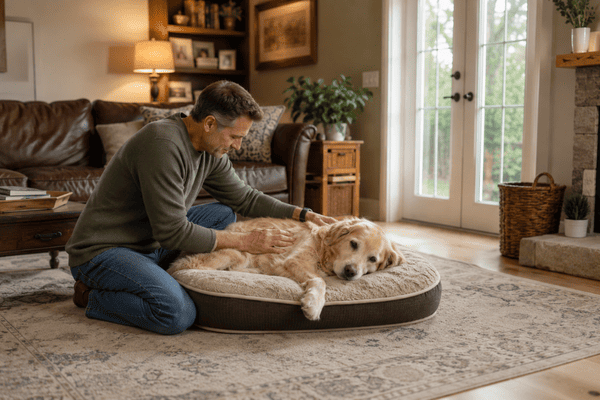
Slow, gentle strokes along your dog’s body can help release tension, as long as you avoid direct pressure on painful joints. Pay close attention to your dog’s response. Some will lean into the contact, while others may prefer space.
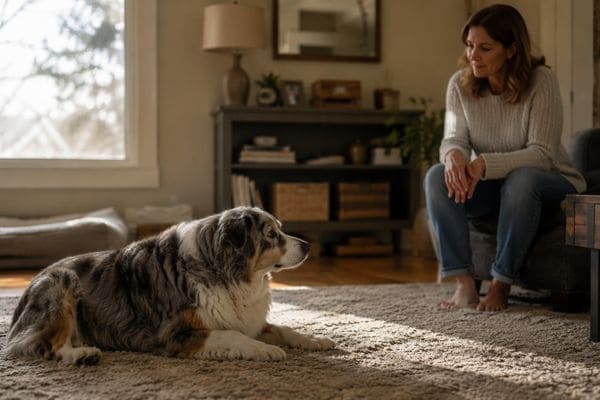
At times, simply sitting nearby is enough. Your presence alone can create a sense of safety that helps your dog settle.
Adjust Movement Without Forcing Activity
It is natural to want your dog to stay active, but during a flare-up, forcing movement often increases discomfort.
Allow your dog to move at their own pace. Offer support when they need help standing, and try to avoid situations that involve jumping, climbing, or walking on slippery floors.
Improve mobility in dogs with arthritis
🔗6 Useful Tools to Improve Mobility in Dogs with Arthritis
Maintaining gentle, supported movement helps preserve mobility without adding unnecessary strain.
Apply Warmth for Natural Relief
Warmth is one of the simplest ways to ease stiffness and promote relaxation.
A warm compress, a heated pet pad, or even a cozy blanket can help improve circulation and relax tight muscles around the joints. After a few minutes, you may notice your dog settling more comfortably, stretching slightly, or finally relaxing into a restful position.
The key is balance. The warmth should always feel gentle and safe, never intense, and your dog should be free to move away if needed.
Keep a Consistent Routine
When dogs are in pain, predictability becomes even more important.
Maintaining regular feeding times, rest periods, and calm daily interactions helps your dog feel secure. A stable routine reduces anxiety and supports better physical recovery over time.
Best daily routine for a dog with arthritis
🔗What Is the Best Daily Routine for a Dog with Arthritis?
Monitor Pain and Know When to Seek Help
Home comfort strategies are essential, but they work best alongside proper veterinary care.
If your dog shows ongoing pain, refuses food, struggles significantly to move, or displays sudden behavioral changes, it is important to seek professional guidance. Arthritis can progress, and treatment adjustments are often necessary.
Canine arthritis management
Reliable information and veterinary support ensure your dog receives the care they truly need.
Emotional Support Makes a Real Difference
Pain affects more than the body. Dogs experiencing discomfort can also feel vulnerable or unsettled.
Your presence plays a quiet but powerful role. Speaking in a calm voice, staying nearby, and offering gentle attention can help your dog feel more secure.
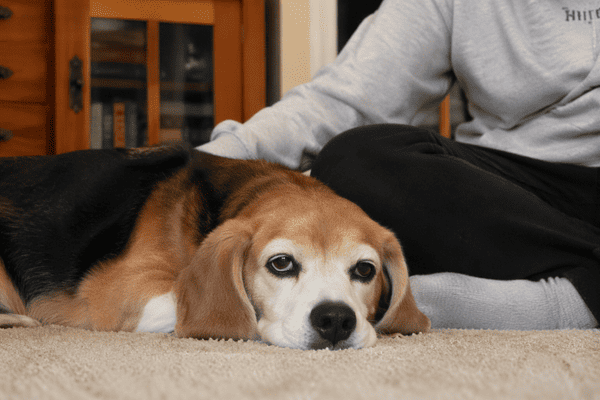
Calm companionship helps reduce anxiety during painful moments
Supporting a dog during arthritis flare-ups is not about doing something complex. It is about being present, attentive, and responsive to what your dog is feeling in that moment.
For your dog, that quiet support is not something small. It is everything.