
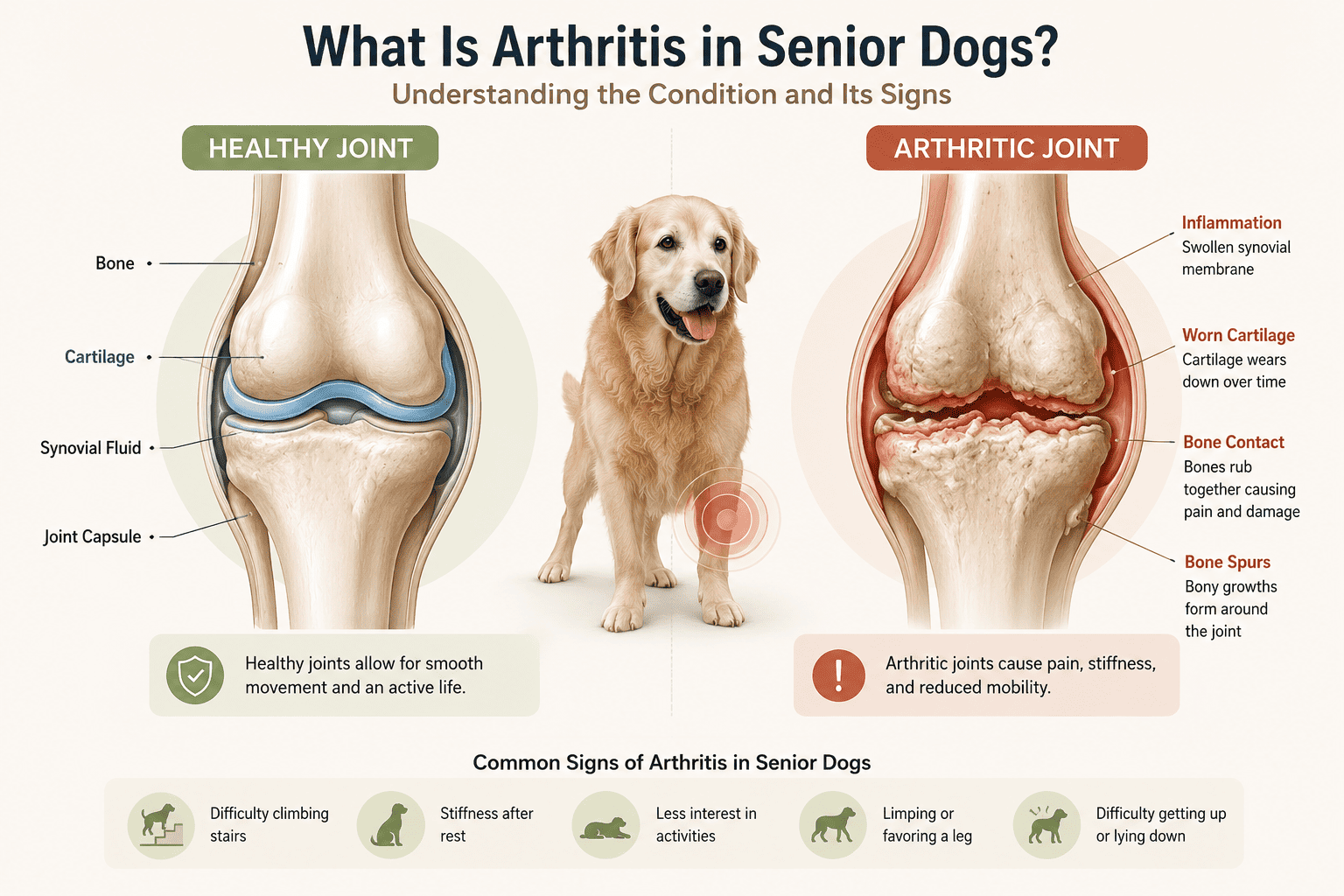
A clear, visual guide to help you understand what arthritis is, how it affects your dog’s joints, and the early signs you should never ignore.
Why Understanding Arthritis Matters
If your dog is slowing down, hesitating to move, or no longer as playful as before, it might not be just aging.
Arthritis is one of the most common causes of joint pain in dogs, especially in senior dogs, yet it often goes unnoticed in its early stages.
Many dogs don’t show obvious signs of pain. Instead, they adapt quietly. They move less, hesitate more, and gradually change their behavior.
Recognizing these subtle changes early can make a significant difference in your dog’s comfort, mobility, and overall quality of life.
What Is Arthritis in Dogs?
Arthritis, also known as osteoarthritis, is a degenerative joint condition that causes pain, stiffness, and reduced mobility due to cartilage breakdown and joint inflammation.
Over time, the protective cartilage inside the joint begins to wear down. Without this cushioning, bones start to rub against each other.
This condition typically develops slowly over time, which is why many owners only notice it when mobility issues become more obvious.
This leads to symptoms such as:
- Inflammation
- Joint pain in dogs
- Stiffness
- Reduced mobility
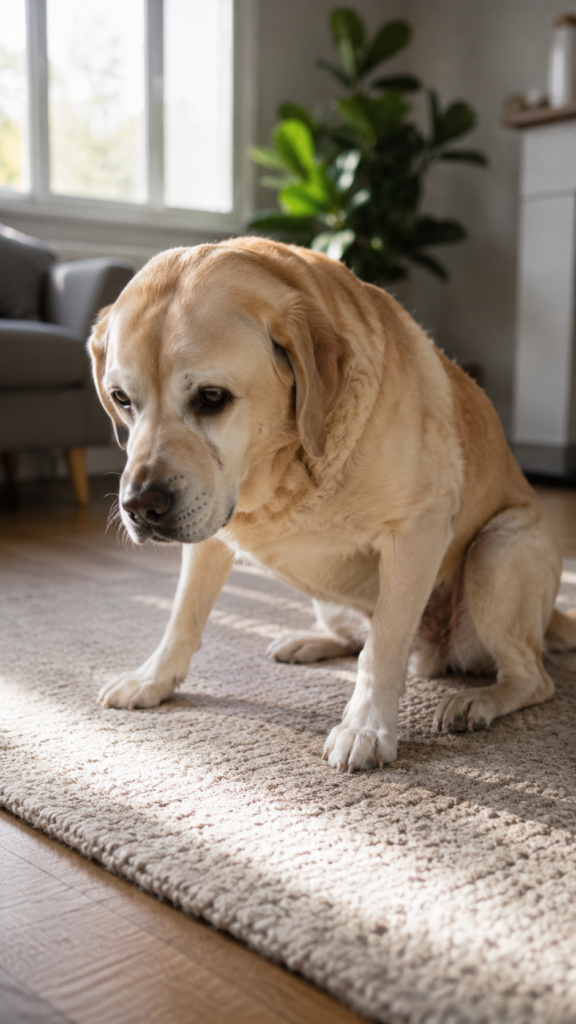
What Happens Inside the Joint
In a healthy joint, cartilage acts as a smooth cushion, allowing bones to move freely and comfortably.
With canine arthritis:
- Cartilage becomes thinner and damaged
- The joint becomes inflamed
- Friction increases between bones
- Pain signals become more frequent
According to veterinary experts, osteoarthritis is one of the leading causes of chronic pain and mobility issues in senior dogs.
This is why even simple movements, like standing up or walking across the room, can become uncomfortable over time.
Common Signs of Arthritis in Senior Dogs
The signs of arthritis in dogs are often subtle and easy to mistake for normal aging.
Watch for changes like:
- Slower movement than usual
- Difficulty getting up or lying down
- Stiffness, especially after rest
- Less interest in walks or play
- Limping or favoring one leg
- Hesitation when climbing stairs or jumping
These symptoms of arthritis in senior dogs tend to appear gradually, not all at once.
If you want a deeper understanding of how to identify discomfort, read:
➡️ How to Recognize Signs of Pain in Senior Dogs with Arthritis
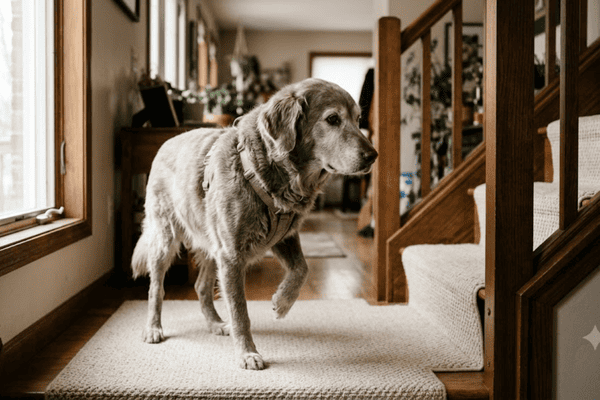
Early Signs vs Advanced Signs
Understanding how arthritis progresses helps you respond earlier and more effectively.
Early stage:
- Slight stiffness
- Reduced enthusiasm for activity
- Longer time to start moving
Advanced stage:
- Visible limping
- Difficulty walking or standing
- Avoidance of movement
- Signs of discomfort even at rest
The earlier you recognize these signs, the easier it is to protect your dog’s joints and slow the progression of the condition.
To learn how to reduce progression, read:
➡️ How to Prevent Arthritis from Getting Worse in Senior Dogs
Why Dogs Hide Pain
Dogs instinctively hide discomfort. This behavior comes from survival instincts.
Instead of showing pain clearly, they often:
- Move less
- Sleep more
- Avoid certain activities
This is why observing small behavioral changes is more effective than waiting for obvious signs of pain.
What You Can Do Next
If you notice any of these signs, the next step is not aggressive treatment. It starts with awareness and simple adjustments.
Small changes can already make a meaningful difference:
- Creating a more comfortable resting area
- Reducing impact on joints
- Adjusting your dog’s daily routine
The sooner you act, the more you can help your dog stay comfortable, active, and confident in their movements.
To take the next step, read:
➡️ What Is the Best Daily Routine for a Dog with Arthritis?