
The Challenge of Growing Large-Breed Puppies
Large-breed puppies like Labrador Retrievers, Golden Retrievers, Great Danes, and German Shepherds go through a delicate phase of rapid growth. Their bodies develop quickly, requiring special care to avoid putting too much stress on their joints and muscles.
A common question among dog parents is: Are short walks or long walks better for growing large-breed dogs?
The truth is, there’s no one-size-fits-all answer. It depends on the dog’s age, energy level, and overall health. Let’s explore both types of walks and see how to apply them safely.
The Importance of Controlled Physical Activity
For large-breed dogs, physical activity is essential not only to burn energy but also to strengthen muscles and bones. However, too much exercise too early can harm developing joints and increase the risk of issues like hip dysplasia or chronic pain.
The secret is balance: provide enough movement to keep your dog healthy, but never push beyond what their young body can handle.
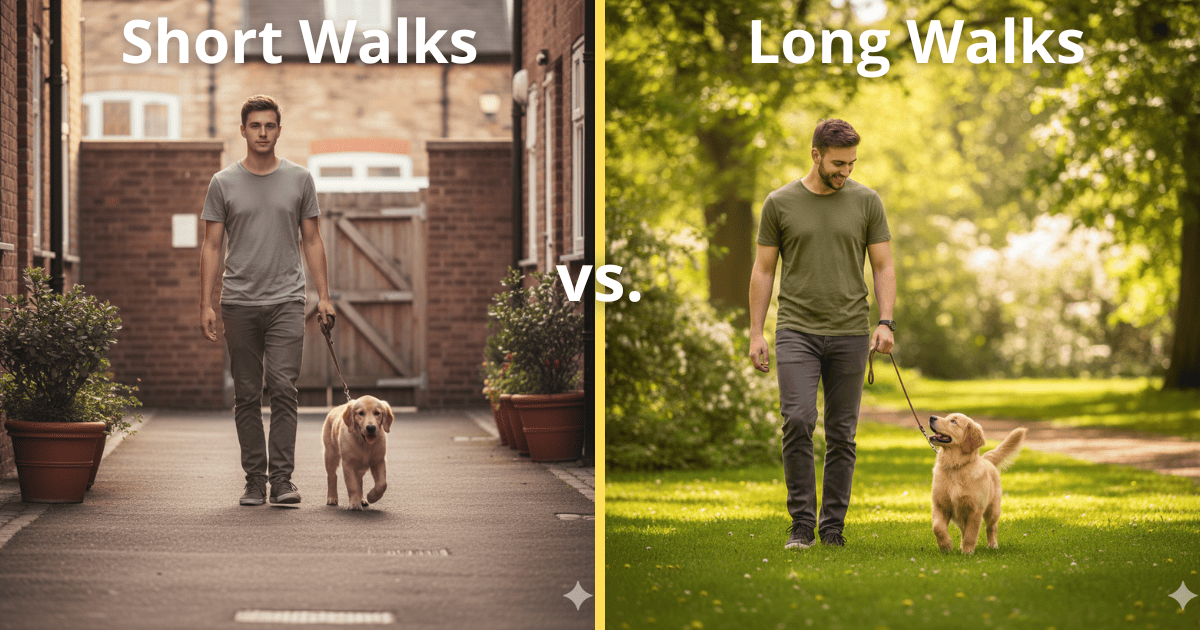
Short Walks: Benefits and When to Use Them
Short walks (10–20 minutes) are ideal for puppies or young dogs in the early stages of growth. Benefits include:
- Lower impact on developing joints
- Easier to schedule multiple times a day
- Constant mental stimulation through different smells and sounds
- Better adaptation for pups still learning leash manners
Short walks are also a great opportunity to introduce basic obedience training such as “heel,” “sit,” and “wait.”
➡️ Also check out: Low-Impact Exercises for Small Dogs Living in Apartments.
Long Walks: When and How to Introduce Them
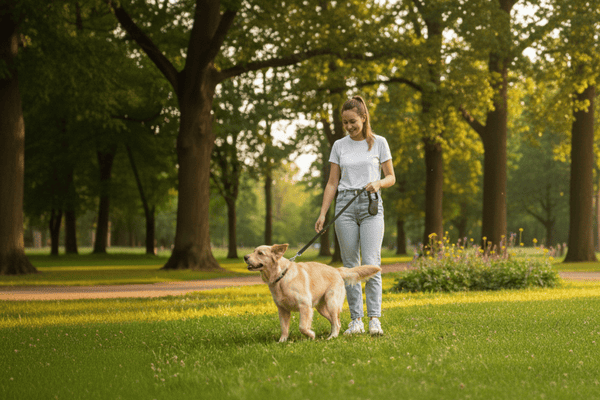
Longer walks (30–60 minutes) can be very beneficial but are generally recommended only once the dog has passed the most critical growth stage, around 12 to 18 months, depending on the breed.
Advantages of long walks:
- Burns off excess energy in very active dogs
- Provides extended mental stimulation by exploring new environments
- Gradually builds physical endurance
⚠️ Always watch for signs of fatigue: heavy panting, excessive drooling, or reluctance to keep walking. If these occur, it’s time to stop.
Balancing Short and Long Walks
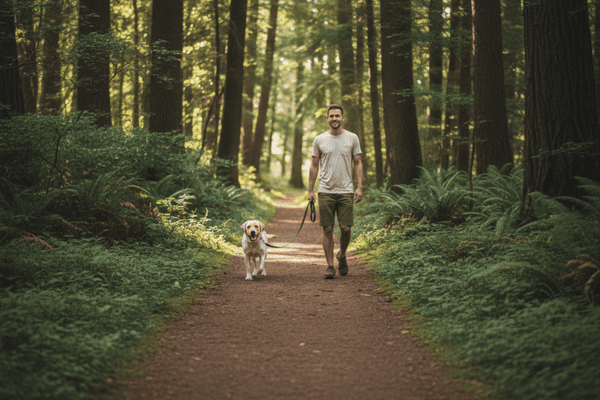
In practice, the best approach is a combination of short and long walks depending on the growth stage:
- Up to 6 months: short walks (10–15 minutes), 2–3 times a day
- 6 to 12 months: moderate walks (20–30 minutes), always watching for fatigue
- After 12 months (depending on breed): gradually introduce longer walks while keeping shorter ones in the routine
➡️ Read also: How to Adjust Care Routines for Senior Dogs with Arthritis
Alternative Activities to Complement Walks
Beyond walking, you can provide safe, low-impact activities such as:
- Controlled fetch with short throws
- Swimming — an excellent low-impact exercise
- Mental stimulation games like puzzle feeders or scent games indoors
➡️ External Source: American Kennel Club – Exercise Guidelines for Young Dogs.
Common Mistakes to Avoid
- Forcing long runs in puppies
- Encouraging frequent jumping from high places
- Ignoring signs of fatigue
- Assuming only long walks are enough to meet a dog’s needs
FAQs from Dog Parents
How many walks per day are recommended for growing large-breed dogs?
👉 Ideally, 2 to 3 short walks per day, combined with rest and light play.
Can I run with my large-breed puppy?
👉 No. Running long distances should only start once the dog’s bones are fully developed, usually after 18 months.
What if I don’t have time for multiple walks every day?
👉 Use enrichment activities at home to provide both mental and physical stimulation.
Walking Towards Healthy Growth
Walks are essential for large-breed dogs, but the duration and intensity must be adjusted according to their growth stage. Start with short, frequent outings in the first months, and gradually increase duration as your dog matures.
More than choosing between short or long walks, the real secret is balance and observation. By respecting your dog’s limits and offering variety, you ensure not just physical health but also emotional well-being throughout their growth.