
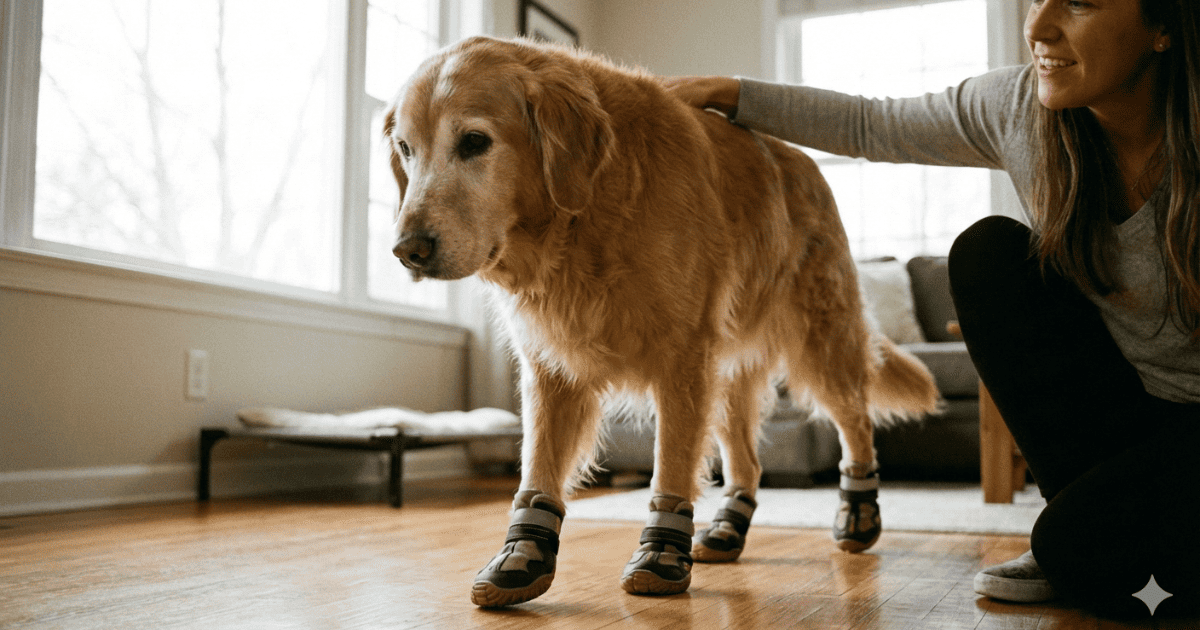
Arthritis, a common condition in senior dogs or those with past joint injuries, causes inflammation, pain, and limited mobility, making everyday activities like walking or standing challenging—especially on slippery or hard surfaces.
Dog shoes can protect paws, improve traction, and reduce joint impact, offering relief during light walks or daily movements. This guide provides practical tips to help you select the best shoes for dogs with arthritis, enhancing their health and quality of life.
For more accessory options, explore essential accessories for dogs with arthritis: comfort, safety, and mobility at home.
Benefits of Dog Shoes for Arthritis
Dog shoes may seem unconventional, but they offer significant advantages for arthritic pets, improving their quality of life.
- Protection from Slippery Floors, Rough Surfaces, and Extreme Temperatures: Shoes shield paws from slick tiles, hot pavement, or cold ground, preventing injuries or discomfort.
- Reduced Impact on Joints During Movement: Cushioned soles absorb shock, easing joint stress during walks and supporting moderate activity.
- Improved Confidence When Walking: Secure footing boosts confidence, encouraging movement and reducing muscle loss from hesitation.
- Example: A 10-year-old Shepherd with knee arthritis walks more steadily on a hardwood floor with cushioned shoes, avoiding slips that could worsen pain.
Key Features to Look for in Dog Shoes for Arthritis
Not all shoes suit arthritic dogs—prioritize features that enhance comfort and support.
- Non-Slip Soles: Slip-resistant rubber soles prevent falls on slick surfaces like tile or wet grass, crucial for weak joints.
- Soft Inner Padding: Padded interiors (e.g., fleece or neoprene) avoid pressure points and skin irritation, common in arthritic dogs.
- Secure Fit: Adjustable straps or Velcro closures ensure a snug fit without tightness, preventing chafing or slipping.
- Durable Materials: High-quality materials like breathable mesh or reinforced rubber withstand wear, offering long-term protection.
- Top Picks:
- QUMY Dog Shoes: Features rubber soles, soft velvet lining, and adjustable straps, ideal for medium to large dogs (sizes 2–8).
- Ruffwear Grip Trex: Offers rugged soles with cushioning, breathable mesh, and a secure fit, suitable for all-day wear (sizes 1.5–3.5).
- Tip: Test flexibility—shoes should bend slightly with your dog’s paw movement.
Recommended Types of Shoes for Dogs with Arthritis
Different shoe styles cater to varying needs, enhancing safety and comfort.
- Cushioned Shoes: Extra padding absorbs shock, perfect for daily walks (e.g., QUMY Dog Shoes with 0.5-inch soles).
- Waterproof Shoes: Keep paws dry and provide grip on wet surfaces (e.g., My Busy Dog Water Resistant Shoes, with waterproof coating, sizes 1–6).
- Velcro or Zipper Closure Shoes: Easy to adjust and secure (e.g., Ruffwear Grip Trex with Velcro straps for a custom fit).
- Example: A dog with arthritis in rainy climates benefits from waterproof shoes to avoid damp paw discomfort.
- Tip: Match the style to your dog’s routine—cushioned for indoors, waterproof for outdoors.
How to Measure and Fit Dog Shoes Properly
A correct fit is critical for comfort and effectiveness.
- Measure the Paws Accurately:
- Place your dog’s paw on paper while standing, trace the outline, and measure length (heel to toe) and width (widest part).
- Measure both front and back paws, as sizes may differ.
- Refer to Size Charts: Compare measurements to the brand’s chart (e.g., QUMY sizes range from 2.2×1.8 inches to 3.5×2.8 inches).
- Test the Fit When Possible: Walk your dog indoors for 5–10 minutes; ensure no limping or shoe slippage.
- Example: A 40-pound dog with 2.5-inch-long paws fits a size 4 QUMY shoe, adjusted with straps for a snug fit.
- Tip: Allow 0.1–0.2 inches extra space for comfort, especially for swollen joints.
For additional home traction solutions, see the 5 best non-slip rugs for dogs with arthritis.
Tips to Help Your Dog Get Used to Wearing Shoes
Dogs may resist shoes initially, but gradual introduction builds acceptance.
- Introduce Gradually:
- Let them sniff the shoes, then wear them indoors for 5–10 minutes daily, increasing to short outdoor walks over a week.
- Example: Start with one shoe per paw, adding more as they adjust.
- Use Positive Reinforcement:
- Offer treats or praise for wearing shoes calmly, reinforcing a positive experience.
- Tip: Use high-value treats like chicken bits for quick learning.
- Watch for Discomfort:
- Check for chewing, odd gaits, or paw lifting; adjust fit or pause if irritated.
- Example: If a dog limps, loosen straps or try a larger size.
- Extra Tip: Practice in a quiet space to reduce stress during adjustment.
Important Safety Tips When Using Dog Shoes
Ensure shoes benefit your dog with proper care.
- Check for Irritation or Sores:
- Inspect paws after each use for redness or rubbing, especially on arthritic skin.
- Tip: Apply pet-safe balm if minor irritation occurs.
- Clean the Shoes Frequently:
- Wash with mild soap and air dry to remove dirt and bacteria (e.g., QUMY shoes are hand-washable).
- Example: Clean weekly if used daily on outdoor walks.
- Know When Not to Use Shoes:
- Avoid if your dog resists strongly, shows pain, or has open wounds—consider alternatives like *ramps vs. stairs for senior dogs: which one is better for arthritis and mobility issues?
- Tip: Consult a vet if resistance persists.
- Extra Safety: Remove shoes after 2–3 hours to prevent overheating or prolonged pressure.
Frequently Asked Questions
How often should I replace dog shoes?
Replace every 3–6 months or when soles wear out, depending on usage and terrain.
Can puppies wear arthritis shoes?
Yes, but consult a vet—puppies need growth flexibility, unlike seniors needing joint support.
What if my dog hates the shoes?
Try a different style or size, introduce slowly with treats, and consult a vet if issues continue.
Conclusion
The right shoes can transform the life of a dog with arthritis, offering improved traction, joint protection, and comfort for better mobility and confidence. With options like the QUMY Dog Shoes (for cushioning) or Ruffwear Grip Trex (for durability), and by ensuring a proper fit and gradual introduction, you can enhance your pet’s daily experience.
Prioritize their comfort with regular checks and safe use—because a happier, more mobile dog starts with the right gear. Share your dog’s shoe journey in the comments!