
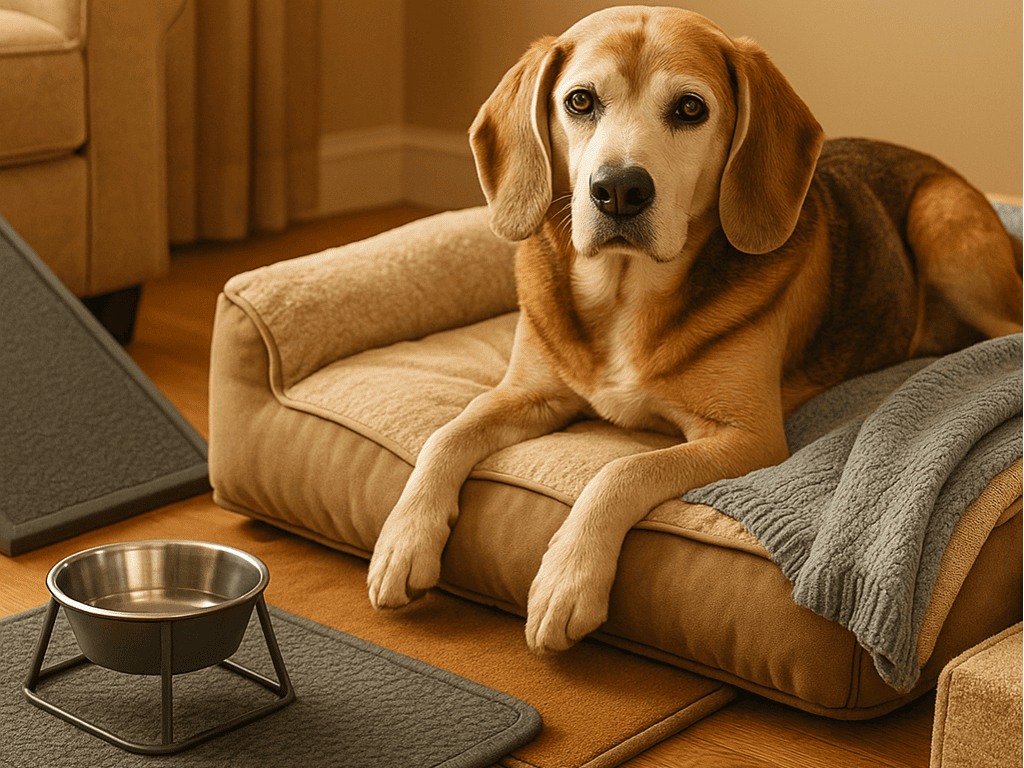
Arthritis, a degenerative joint condition common in senior dogs, causes pain, inflammation, and stiffness that can severely limit mobility and well-being. Fortunately, the right accessories can offer comfort, enhance safety, and restore independence for your furry friend.
From ramps to orthopedic beds, these tools reduce joint strain and make daily life easier. This article explores the best accessories for dogs with arthritis, highlighting how they improve quality of life.
For more on supportive sleeping options, see best orthopedic dog beds for senior dogs with arthritis.
Understanding Arthritis in Dogs
Arthritis affects a dog’s joints, leading to chronic pain and reduced movement, especially in older pets. This condition can make simple tasks—like walking or resting—painful, impacting their overall happiness.
- Symptoms: Limping, stiffness after rest, reluctance to move, or whining when touched.
- Impact: Limits activity, increases injury risk, and affects emotional health.
- Solution: With proper accessories, you can alleviate discomfort and boost independence.
Why Accessories Matter for Dogs with Arthritis
The right tools reduce joint strain, promote safe movement, and prevent injuries, enhancing your dog’s confidence and comfort.
- Benefits:
- Minimizes pressure on hips, knees, and spine.
- Prevents falls that could worsen arthritis.
- Encourages gentle activity for better joint health.
- Example: A ramp can help a 12-year-old Lab avoid jumping onto a couch, reducing hip strain.
These accessories are vital for managing arthritis effectively.
Accessory 1: Ramps and Stairs
Arthritic dogs struggle with jumping or climbing onto elevated surfaces like beds or cars. Ramps and stairs provide safe alternatives.
Benefits of Using Ramps and Stairs
- Prevent jumping that exacerbates joint damage.
- Enable pain-free access to favorite spots.
- Boost independence for dogs with mobility issues.
- Example: A Dachshund with back issues can use a ramp to enter a car without risking further injury.
Types of Ramps and Stairs
- Foldable Ramps: Ideal for cars or storage (e.g., PetSafe Happy Ride Telescoping Ramp, adjusts 39–87 inches, supports 150 lbs).
- Pet Stairs: Perfect for indoor use (e.g., Petsfit Wooden Pet Stairs, 3 steps, 150 lbs capacity).
- Anti-Slip Surfaces: Ensure safety with rubberized treads or carpet (e.g., Tail Waggers Flexi-Step, foldable with grip).
- Tip: Choose based on your dog’s weight and the height to access (e.g., 24-inch bed needs a 4–5-foot ramp).
For a detailed comparison, explore *ramps vs. stairs for senior dogs: which one is better for arthritis and mobility issues?
Accessory 2: Non-Slip Mats
Slippery floors (e.g., tile, hardwood) pose a fall risk for arthritic dogs, potentially causing pain or injury.
Why Non-Slip Mats Are Important
- Provide secure footing to prevent slips.
- Reduce joint trauma from sudden movements.
- Boost confidence for walking or standing.
- Example: A non-slip mat near a water bowl helps a stiff-legged dog drink without sliding.
Placement Tips
- High-traffic areas (hallways, kitchens).
- Near food bowls or furniture.
- Under ramps/stairs for added stability.
- Top Pick: Ruggable Linear Striped Multicolor Rug (washable, rubber-backed, multiple sizes).
For more options, see the 5 best non-slip rugs for dogs with arthritis.
Accessory 3: Heated Pads and Thermal Blankets
Cold weather can worsen arthritis pain and stiffness, making heated accessories a comforting solution.
Advantages of Heated Accessories
- Relax muscles and joints with gentle warmth.
- Improve circulation, reducing stiffness.
- Create a cozy resting spot.
- Example: A heated pad under a blanket can soothe a dog’s sore hips on a chilly night.
Tips for Safe Use
- Use models with auto shut-off (e.g., K&H Pet Products Heated Pet Pad, 4-watt, auto-off after 8 hours).
- Supervise initially to ensure comfort.
- Place under bedding or use thermal blankets (e.g., PetAmi Thermal Self-Warming Pet Mat) to retain body heat.
- Tip: Start with low heat settings to avoid burns on sensitive skin.
Accessory 4: Orthopedic Dog Beds
Arthritic dogs need supportive rest to ease joint pain and improve sleep quality.
Benefits of Orthopedic Beds
- Memory foam or high-density foam reduces pressure points, supporting hips and elbows.
- Promotes restful sleep, aiding muscle recovery and inflammation reduction.
- Prevents worsening of arthritis by maintaining joint alignment.
- Example: A 70-pound Golden Retriever with elbow arthritis rests better on a Big Barker Orthopedic Bed (7-inch foam, 200 lbs capacity).
How to Choose the Right Bed
- Size and Weight: Match to your dog’s size (e.g., large breeds need 5–7-inch foam).
- Bed Height: Low-profile beds (e.g., FurHaven Orthopedic Pet Bed, 6-inch height) suit limited mobility.
- Easy Cleaning: Opt for removable, washable covers (e.g., PetFusion Ultimate Dog Bed with waterproof liner).
- Extra Features: Non-slip bottoms, bolstered edges, or heated options enhance comfort.
Accessory 5: Elevated Food and Water Bowls
Bending to eat or drink can strain an arthritic dog’s neck and legs, making elevated bowls a practical solution.
How These Accessories Help
- Raise bowls to chest level, reducing neck and shoulder strain.
- Improve digestion with a natural standing posture.
- Make mealtime enjoyable and pain-free.
- Example: A 50-pound dog with front-leg arthritis eats comfortably with a Neater Pet Brands Raised Bowl (adjustable to 8 inches).
Advantages of Adjustable, Ergonomic Models
- Adjustable Height: Adapts to changing needs (e.g., OurPets Comfort Diner, 3–10 inches).
- Non-Slip Design: Ensures stability (e.g., rubber feet on Neater bowls).
- Easy to Clean: Stainless steel or durable plastic (e.g., dishwasher-safe OurPets).
- Tip: Set height at chest level—measure from floor to elbow.
Tips for Choosing the Right Height
- Measure Your Dog: Bowl should align with the chest.
- Match the Size: Small dogs (e.g., 10 lbs) need 4–6-inch stands; large dogs (e.g., 80 lbs) need 8–12 inches.
- Watch for Discomfort: Adjust if your dog hesitates or tilts its head awkwardly.
Extra Tips for Caring for Dogs with Arthritis
Complement accessories with daily care routines:
- Combine Accessories with Gentle Exercise and Therapy: Short walks on grass, swimming, or supervised stretches maintain strength. Ramps and mats support these activities safely. See hydrotherapy: a safe exercise for dogs with arthritis.
- Maintain a Healthy Weight: Excess weight strains joints. Use a vet-approved diet, limit treats (under 10% of daily calories), and pair with mild exercise.
- See the Vet Regularly: Checkups assess accessory effectiveness, recommend medications, or adjust care plans.
- Love Makes the Difference: Offer gentle affection, a soft voice, and a cozy spot to boost emotional health.
- Example: A 15-minute walk with a ramp-supported entry keeps a dog active without joint stress.
Frequently Asked Questions
How often should I replace arthritis accessories?
Replace every 1–3 years or when worn (e.g., flattened beds, slippery mats), depending on usage and quality.
Can heated pads be used all day?
No, use for 20–30 minutes at a time with auto shut-off to prevent overheating; consult your vet.
Are elevated bowls safe for all dogs?
Yes, if adjusted to chest height, but avoid for dogs with neck injuries—check with a vet.
Conclusion
Caring for a dog with arthritis becomes manageable with essential accessories like ramps, orthopedic beds, non-slip mats, heated pads, and elevated bowls. These tools reduce pain, enhance safety, and restore mobility, creating a supportive home environment.
Paired with gentle exercise, a healthy diet, regular vet visits, and your love, they ensure your senior dog enjoys a happier, more comfortable life. Invest in quality gear tailored to your dog’s needs—because their well-being is worth it. Share your favorite accessory in the comments!