
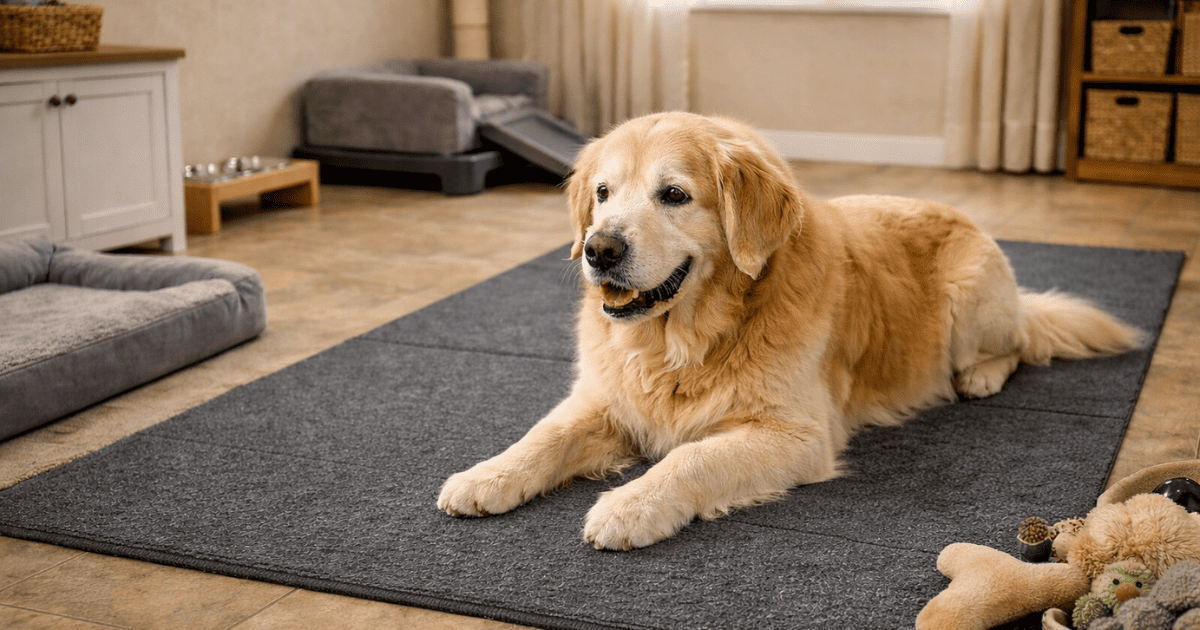
Simple home adjustments that help senior dogs with arthritis move safely, reduce joint pain, and maintain independence.
Caring for a senior dog with arthritis often requires more than medication or exercise routines. The home environment itself plays a major role in your dog’s comfort and mobility.
As arthritis progresses, everyday surfaces and obstacles can become difficult or even dangerous for aging dogs. Slippery floors, stairs, and high furniture may increase joint strain or lead to accidental falls.
Learning how to prepare your home for a senior dog with arthritis can significantly improve your pet’s quality of life. Small changes throughout the house can help reduce pain, improve mobility, and make daily activities easier for your dog.
Why Home Adaptations Are Important for Dogs with Arthritis
Arthritis causes inflammation in the joints, leading to stiffness and reduced flexibility. Movements that were once simple can become painful, especially when dogs must climb, jump, or walk on unstable surfaces.
By adapting the home environment, owners can help reduce unnecessary stress on the joints.
Benefits of home adaptations include:
- improved mobility
- reduced risk of slipping or falling
- less joint pressure during movement
- increased confidence while walking
- greater independence for the dog
Even small environmental changes can have a noticeable impact on how comfortably your dog moves around the house.
According to the American Kennel Club, home modifications can significantly improve mobility and safety for dogs living with arthritis:
🔗https://www.akc.org/expert-advice/health/
Use Non-Slip Flooring to Prevent Falls
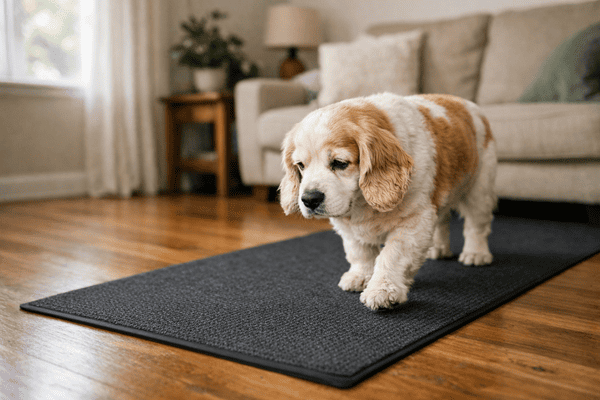
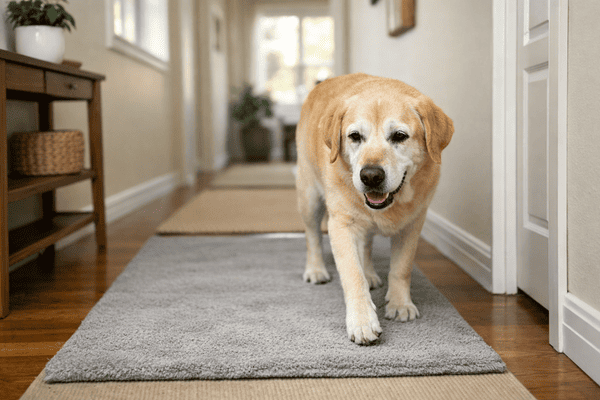
Slippery floors are one of the biggest challenges for senior dogs with arthritis. Hardwood, tile, and laminate surfaces can make it difficult for dogs to maintain traction when walking.
When dogs struggle to keep their balance, they often tense their muscles, which can worsen joint discomfort.
Adding non-slip surfaces can dramatically improve stability.
Options include:
- non-slip rugs
- rubber-backed mats
- foam floor tiles
- carpet runners along walking paths
Focus on areas where your dog walks frequently, such as hallways, near food bowls, and around sleeping areas.
Provide Orthopedic Bedding for Joint Support
Quality sleep is essential for dogs with arthritis. Hard floors or thin beds may increase pressure on inflamed joints, making it difficult for dogs to rest comfortably.
Orthopedic dog beds are designed to support the body evenly and reduce pressure points.
Benefits of orthopedic beds include:
- improved joint alignment
- reduced pressure on hips and shoulders
- better sleep quality
- reduced stiffness after resting
Place the bed in a quiet area where your dog feels safe and comfortable. Some dogs also benefit from having multiple resting spots around the house.
Use Ramps Instead of Stairs
Stairs can be difficult and painful for senior dogs with arthritis. Each step requires bending the joints, which may increase discomfort.
Installing ramps helps dogs access elevated areas more safely.
Common places where ramps can help include:
- getting onto couches or beds
- entering the car
- accessing outdoor areas with steps
Ramps allow dogs to move with less joint strain while maintaining independence.
Learn more about maintaining safe movement routines:
🔗Safe Walks for Senior Dogs with Arthritis: Keep Your Dog Active
Combining safe indoor environments with gentle outdoor activity supports overall mobility.
Keep Food and Water Easily Accessible
As arthritis progresses, bending down or walking long distances inside the home can become uncomfortable.
To help your dog stay hydrated and nourished:
- place food and water bowls in easily accessible locations
- avoid placing bowls on slippery floors
- consider slightly elevated bowls to reduce neck and joint strain
Keeping essential resources nearby helps minimize unnecessary movement that could cause discomfort.
Create Clear and Safe Walking Paths
Senior dogs benefit from predictable, obstacle-free pathways inside the home.
Remove objects that could block movement or create hazards, such as:
- loose cables
- small furniture pieces
- cluttered walkways
- unstable rugs
Dogs with arthritis often move more slowly, so clear walking areas help them navigate the house safely and confidently.
Create Clear and Safe Walking Paths
Senior dogs benefit from predictable, obstacle-free pathways inside the home.
Remove objects that could block movement or create hazards, such as:
- loose cables
- small furniture pieces
- cluttered walkways
- unstable rugs
Dogs with arthritis often move more slowly, so clear walking areas help them navigate the house safely and confidently.
Maintain Gentle Daily Activity
Even with a comfortable home environment, dogs with arthritis still need regular movement to maintain joint health.
Short periods of gentle activity help prevent stiffness and maintain muscle strength.
Discover gentle exercises that support mobility:
🔗5 Simple Stretches for Senior Dogs to Relieve Arthritis Pain
Regular stretching and low-impact movement help complement the home adaptations you create.
What Is the Best Home Setup for a Dog with Arthritis?
The best home setup for a dog with arthritis focuses on safety, comfort, and accessibility. Non-slip flooring, orthopedic bedding, ramps, and clear walking paths help reduce joint strain and prevent falls. These simple adjustments allow senior dogs to move more comfortably and maintain independence inside the home.
Can Home Modifications Really Help Dogs with Arthritis?
Yes. Simple home modifications can significantly improve mobility and comfort for dogs with arthritis. By reducing slipping hazards, minimizing stairs, and providing supportive resting areas, owners can help prevent injuries and decrease joint strain during daily activities.
Creating a Comfortable Environment for Aging Dogs
Preparing your home for a senior dog with arthritis is one of the most effective ways to support long-term comfort and mobility.
Small adjustments such as adding non-slip rugs, providing orthopedic beds, and installing ramps can make daily movement easier and safer. When combined with gentle exercise and veterinary care, these environmental changes help dogs stay active, confident, and comfortable as they age.
A well-adapted home environment allows senior dogs to maintain independence and enjoy their daily routines with less pain and greater security.