Gentle stretching routines that help senior dogs with arthritis improve mobility, reduce stiffness, and move more comfortably.
Understanding Stretches for Senior Dogs with Arthritis
Arthritis is a common condition in aging dogs and often causes joint stiffness, inflammation, and reduced mobility. As joints become painful, many senior dogs move less, which can worsen stiffness and muscle weakness over time.
Adding stretches for senior dogs with arthritis to a daily routine can help reduce discomfort and improve flexibility. Gentle stretching keeps muscles active, increases circulation around the joints, and allows dogs to move more comfortably during daily activities such as walking, standing, or climbing stairs.
Unlike intense exercise, stretching is a low-impact activity that can be performed safely at home when done slowly and carefully. Even a few minutes of daily stretching can help support joint health and improve your dog’s quality of life.
When combined with proper veterinary care, a balanced diet, and regular low-impact activity, stretching becomes an effective part of arthritis management.
Why Stretching Helps Senior Dogs with Arthritis
Stretching provides several important physical benefits for aging dogs experiencing joint pain and stiffness.
Improves Flexibility
Arthritic joints often lose their natural range of motion. Gentle stretching helps maintain flexibility and prevents muscles from becoming tight.
Reduces Muscle Tension
Muscles around painful joints may become tense as the body tries to compensate for discomfort. Stretching helps release that tension and improve movement.
Promotes Better Circulation
Stretching encourages healthy blood flow, which delivers oxygen and nutrients to muscles and joints.
Prevents Joint Stiffness
Regular movement helps lubricate joints and reduce stiffness caused by inactivity.
Learn how movement supports mobility in arthritic dogs:
🔗The Role of Exercise in Maintaining Mobility in Senior Dogs with Arthritis
Supports Safer Physical Activity
Flexible muscles and joints help dogs move more safely during daily activities such as walking or climbing stairs.
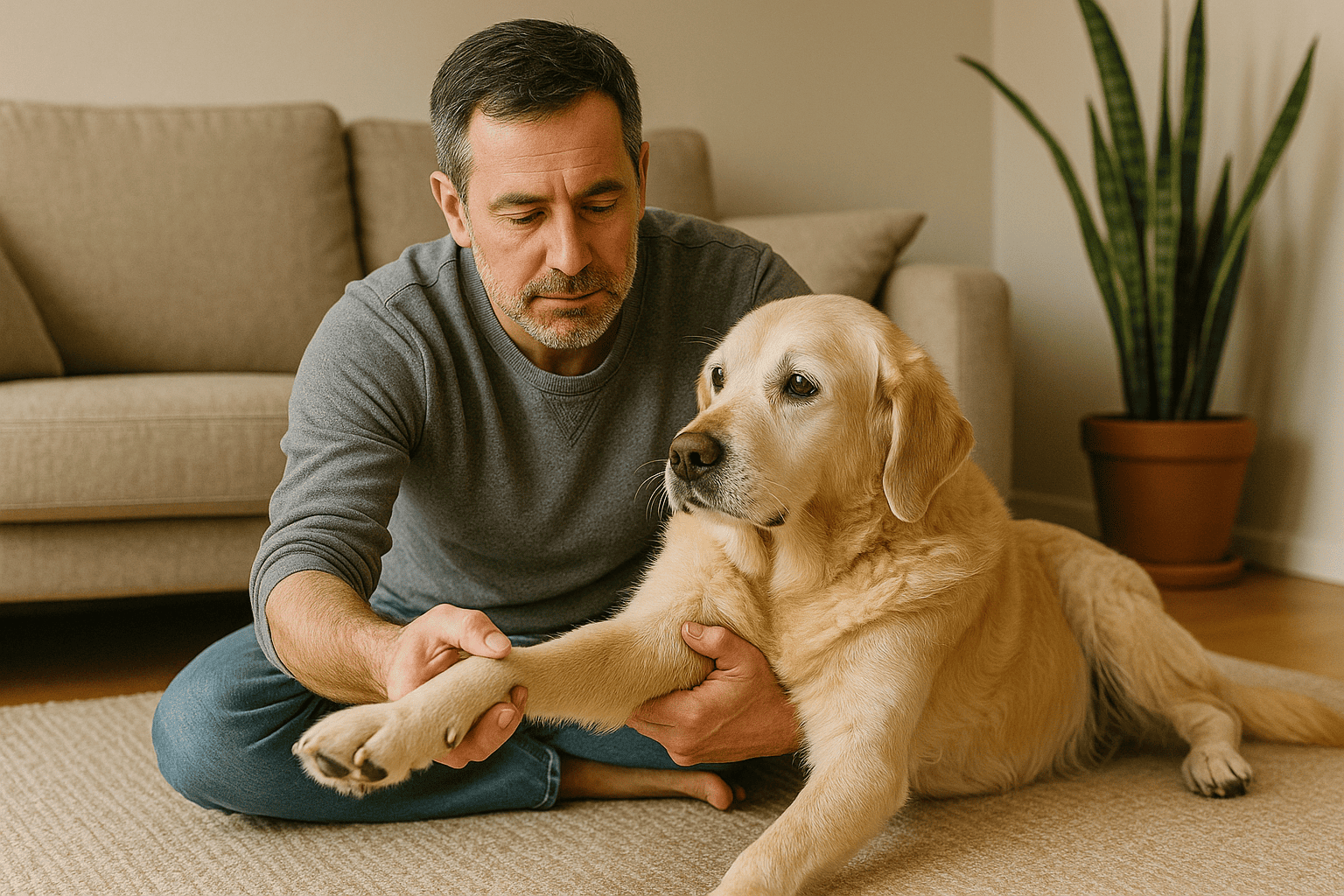
1. Front Leg Extension
This stretch helps relieve stiffness in the shoulders and elbows.
How to Perform
- Have your dog stand or lie comfortably on their side.
- Gently hold one front leg just above the paw.
- Slowly extend the leg forward as if your dog is reaching out.
- Hold the position for 5 to 10 seconds.
- Slowly release and return the leg to a relaxed position.
Repeat 2 to 3 times for each front leg.
Helpful Tips
- Perform the movement slowly and gently.
- Never force the leg beyond your dog’s natural range of motion.
- Stop immediately if your dog shows discomfort.
2. Rear Leg Stretch
This stretch targets the hips and knees, areas commonly affected by arthritis.
How to Perform
- Position your dog lying comfortably on their side.
- Support one rear leg with both hands.
- Slowly extend the leg backward so it aligns with the body.
- Hold the stretch for 5 to 10 seconds.
- Gently return the leg to the starting position.
Repeat 2 to 3 times on each leg.
Helpful Tips
Perform this stretch after a short walk when muscles are warm and more flexible.
Learn how to plan gentle walking routines:
🔗Safe Walks for Senior Dogs with Arthritis: Keep Your Dog Active
Warm muscles reduce the risk of strain and make stretching more comfortable.
3. Neck Side Stretch
This stretch improves flexibility in the neck and upper spine.
How to Perform
- Have your dog sit or stand comfortably.
- Hold a small treat close to their nose.
- Slowly move the treat toward one shoulder.
- Allow your dog to turn their head naturally to follow it.
- Hold for a few seconds and reward them.
Repeat 3 to 5 times on each side.
Helpful Tips
Move the treat slowly and avoid sudden movements. The goal is a gentle stretch, not a forced twist.
This stretch also strengthens the bond between you and your dog by turning exercise into a positive interaction.
4. Spine Flex and Stretch
The spine plays an important role in overall mobility. Gentle stretching can help reduce stiffness along the back.
How to Perform
- Have your dog stand comfortably.
- Hold a treat near their chest.
- Slowly move the treat along the belly toward the tail.
- Your dog will naturally curve their body to follow the treat.
- Repeat slowly 3 to 4 times in each direction.
Helpful Tips
Perform this movement slowly to avoid sudden twisting of the spine.
If your dog struggles to follow the movement, reduce the range of motion.
5. Gentle Back Massage with Stretch
Combining a light massage with stretching can help reduce tension and improve circulation.
How to Perform
- Have your dog lie down in a comfortable position.
- Use your fingers to apply gentle circular pressure along the spine.
- Slowly move your hands down the back toward the tail.
- Allow your dog to naturally stretch during or after the massage.
Spend one to two minutes performing this activity.
Helpful Tips
Keep pressure light and movements slow.
A calm environment can help your dog relax during the massage.
Discover other therapies that support mobility:
🔗Physical Therapy for Senior Dogs: How It Helps Manage Arthritis
Combining stretching with physical therapy can significantly improve mobility for many dogs.
Safety Tips Before Starting Stretching Exercises
Stretching should always be done carefully, especially for dogs with arthritis.
Before starting a stretching routine, consult your veterinarian. A professional evaluation ensures the exercises are appropriate for your dog’s condition.
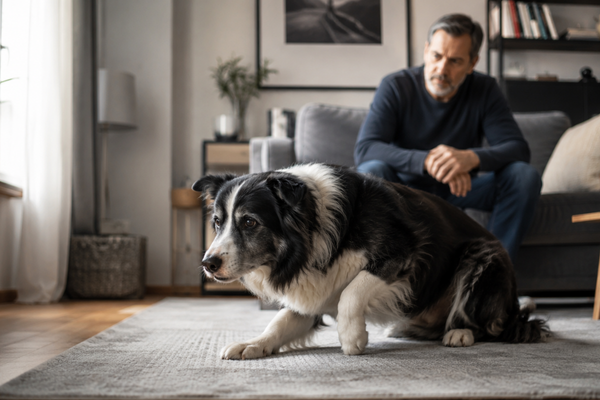
Watch for warning signs during stretching, including:
- limping
- whining or vocalizing pain
- sudden stiffness
- pulling the leg away
- reluctance to move
If any of these occur, stop the exercise immediately.
Learn how to recognize pain symptoms early:
🔗How to Recognize Signs of Pain in Senior Dogs with Arthritis
Recognizing pain signals early helps prevent further injury.
Creating a Daily Stretching Routine
Consistency is more important than intensity when it comes to stretching.
A simple daily routine may include:
- 5 to 10 minutes of gentle stretching
- performing stretches after a short walk
- keeping movements slow and controlled
Daily stretching works best when combined with other healthy habits such as proper nutrition, weight management, and safe physical activity.
Even small improvements in flexibility can help senior dogs move more comfortably and remain active longer.
Helping Your Senior Dog Stay Comfortable and Mobile
Adding stretches for senior dogs with arthritis to your dog’s routine can greatly improve their comfort and mobility.
Gentle stretching helps maintain flexibility, reduce muscle tension, and support joint health. When performed regularly and safely, these simple movements can make everyday activities easier for aging dogs.
Combined with veterinary guidance, proper exercise, and supportive care, stretching helps senior dogs maintain a better quality of life and enjoy their daily routines with less discomfort.