
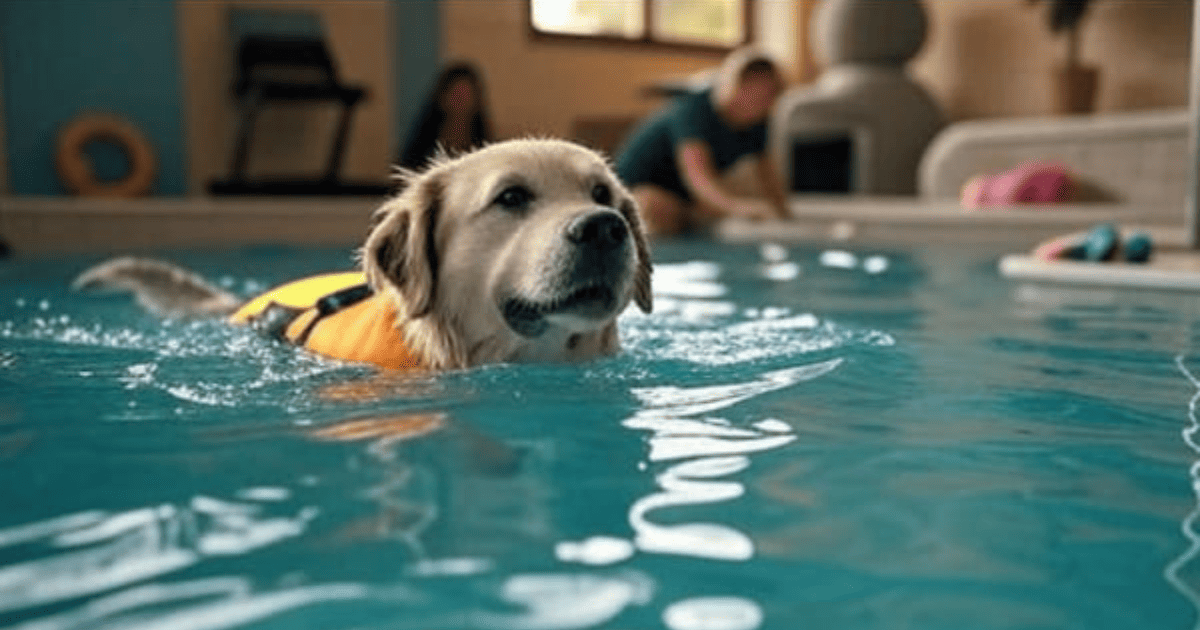
Arthritis, a prevalent condition in senior dogs, brings joint pain, stiffness, and reduced mobility, often making traditional exercise challenging. Hydrotherapy offers a safe alternative, allowing dogs to move freely in water without joint stress.
This article explores how hydrotherapy for dogs with arthritis can relieve pain, improve mobility, and enhance quality of life through vet-approved water exercises.
For additional mobility aids, check out 6 useful tools to improve mobility in dogs with arthritis.
Why Hydrotherapy Is Ideal for Dogs with Arthritis
Hydrotherapy stands out as an ideal exercise for arthritic dogs because water’s buoyancy supports their body weight, reducing pressure on painful joints.
- Low-Impact Movement: Water minimizes impact, making movements smoother and less painful.
- Gentle Resistance: Helps strengthen muscles without overexertion.
- Example: A 10-year-old German Shepherd with hip arthritis can swim without the jarring impact of a land-based walk, easing discomfort.
Hydrotherapy allows dogs to stay active while protecting their joints, making it a go-to option for arthritis management.
The Main Benefits of Hydrotherapy for Arthritic Dogs
Hydrotherapy offers a range of physical and emotional benefits that enhance overall well-being.
Low-Impact Pain Relief
Water supports up to 90% of a dog’s body weight, reducing stress on joints like hips and knees.
- Benefit: Decreases pain during and after sessions, often noticeable in reduced limping.
- Example: A 50-pound dog feels lighter in water, allowing pain-free movement.
Improved Joint Mobility
The gentle resistance of water stretches and strengthens muscles around joints, enhancing flexibility.
- Benefit: Increases range of motion, helping dogs move more freely over time.
- Tip: Combine with support tools like those in benefits of using support vests for dogs with arthritis.
Increased Muscle Strength
Paddling against water builds muscle without impact-related injury risks.
- Benefit: Strengthens supporting muscles, improving stability and reducing joint strain.
- Example: A dog with weakened rear legs gains muscle tone after regular hydrotherapy sessions.
Weight Management
Excess weight exacerbates arthritis by adding joint stress. Hydrotherapy supports safe weight loss for dogs unable to handle land-based exercise.
- Benefit: Burns calories gently, helping maintain a healthy weight.
- Example: A 70-pound dog loses 5 pounds over months, easing hip pressure.
Emotional Well-Being
The calming effect of water reduces stress, boosting your dog’s mood and confidence.
- Benefit: Encourages a positive outlook, countering the frustration of limited mobility.
What a Typical Hydrotherapy Session Looks Like
Hydrotherapy sessions, often guided by certified canine therapists, take place in heated pools or underwater treadmills.
- Warm-Up: Gentle water introduction (5 minutes) to relax muscles, often with therapist support.
- Guided Movement: Tailored exercises like swimming or walking (10–20 minutes), adjusted for arthritis severity.
- Cool-Down: Slower movements (5 minutes) to relax joints and prevent stiffness.
- Session Length: Typically 20–30 minutes, depending on the dog’s fitness and age.
- Example: A session for a 60-pound dog with moderate arthritis might include 15 minutes of slow treadmill walking in a heated pool at 85°F.
- Tip: Look for facilities like Canine Hydrotherapy Association members or local centers like K9 Swim in Florida, known for certified staff and clean pools.
Is Hydrotherapy Safe for All Dogs?
Hydrotherapy is generally safe but requires vet approval, especially for dogs with specific conditions.
- Contraindications: Avoid if your dog has heart conditions, open wounds, infections, or severe respiratory issues.
- Safety Measures:
- Ensure water temperature is 82–92°F to avoid overheating or chilling.
- Use life jackets for weak swimmers (e.g., Outward Hound Dog Life Jacket, sizes XS–XL).
- Tip: Start with a vet checkup to confirm hydrotherapy suitability.
- Example: A dog with a healing wound skips hydrotherapy until fully healed, as advised by a vet.
How to Get Started with Hydrotherapy for Your Dog
Begin hydrotherapy with careful planning to ensure a positive experience.
- Consult Your Vet: Get clearance and recommendations for certified canine hydrotherapists.
- Find a Facility: Look for clean, professional centers with experienced staff (e.g., HydroPaws in California, offering underwater treadmills and heated pools).
- Prepare Your Dog:
- Introduce water slowly at home with a kiddie pool to build comfort.
- Bring familiar toys or treats to reduce anxiety.
- Complement with Other Care:
- Add gentle stretches or play activities at home.
- Use natural supplements like glucosamine, as vet-recommended.
- Adjust routines for better arthritis management—see how to adjust daily routines for senior dogs with arthritis.
- Tip: Schedule an initial session to assess your dog’s response before committing to a program.
Frequently Asked Questions
How often should my dog do hydrotherapy?
Typically, 1–2 sessions per week for 4–6 weeks, then adjust based on progress—consult your vet.
Can hydrotherapy replace medication for arthritis?
It complements medication but doesn’t replace it; discuss with your vet for a balanced plan.
What if my dog fears water?
Start with shallow water and positive reinforcement; a certified therapist can help ease fears.
Final Thoughts
Hydrotherapy for dogs with arthritis remains one of the safest and most effective ways to improve their physical and emotional well-being, helping them stay active, manage pain, and live more comfortably.
With benefits like low-impact pain relief, improved mobility, and muscle strength, it’s an excellent option for senior dogs.
Consult your vet and find a certified hydrotherapist to get started, ensuring your dog enjoys a happier, more mobile life. Share your hydrotherapy experience in the comments!