
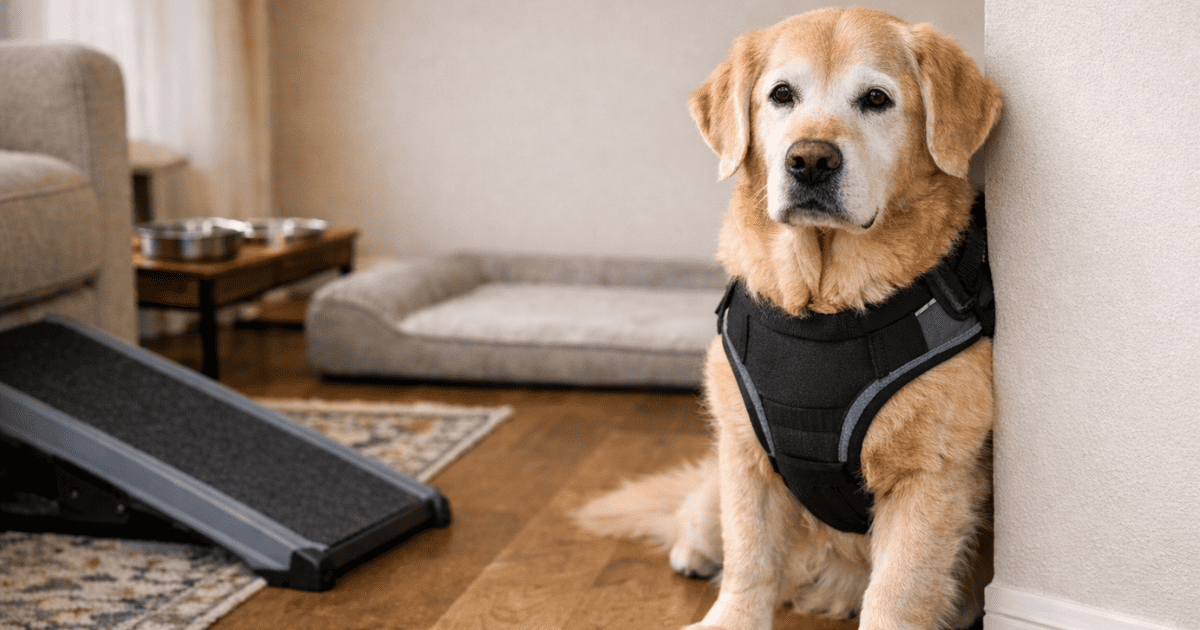
Arthritis, a common condition in aging dogs, causes joint inflammation and stiffness, making simple tasks like jumping or walking on slippery floors painful. To enhance quality of life, vet-approved tools can reduce discomfort and promote easier movement, offering comfort, independence, and safety.
This article explores six practical tools designed for arthritic dogs, helping your senior pet navigate daily life with less pain. For additional support options, see benefits of using support vests for dogs with arthritis.
1. Portable Ramps and Stairs
Jumping onto beds, sofas, or into cars can strain arthritic joints, risking further damage. Portable ramps and stairs provide a safe solution.
How They Help
- Reduce impact on sensitive joints like hips and knees.
- Enable independent access to elevated areas.
- Prevent joint damage from repeated jumping.
- Example: A 10-year-old Lab uses a ramp to access a 24-inch bed without straining its hips.
Tips for Choosing Ramps and Stairs
- Non-Slip Surfaces: Ensure traction with rubberized or carpeted surfaces (e.g., PetSafe Happy Ride Telescoping Ramp, 150 lbs capacity).
- Correct Size and Slope: Match to your dog’s size—e.g., a 5-foot ramp for a 3-foot car entry.
- Durable but Lightweight: Opt for aluminum or reinforced plastic (e.g., Petsfit Wooden Pet Stairs, 3 steps, 150 lbs).
Best Use Cases
- Place ramps by beds or couches for daily use.
- Use foldable models for car travel (e.g., PetSafe adjusts 39–87 inches).
- Install stairs near resting spots for comfort.
- Tip: Test stability before use to build your dog’s confidence.
2. Support Harnesses and Lift Leashes
Walks are vital for health, but arthritis can make them challenging. Support harnesses and lift leashes reduce joint stress and aid movement.
Key Benefits
- Relieve pressure on back or front limbs.
- Improve stability on stairs or uneven ground.
- Offer padded comfort to prevent chafing.
- Example: A harness helps a 40-pound dog with rear weakness navigate a short uphill walk.
What to Look For
- Adjustable Fit: Ensures proper support (e.g., Help ‘Em Up Harness, sizes S–XL).
- Ergonomic Handles: Easy control without straining your back.
- Breathable Materials: Avoid irritation with neoprene or mesh.
How to Use Them
- Gradual Training: Introduce with treats, starting with 5-minute sessions.
- Targeted Support: Use during uphill walks or after rest.
- Check Fit Regularly: Adjust straps to prevent slippage.
- Tip: Pair with a vest for comprehensive support, as detailed in benefits of using support vests for dogs with arthritis.
3. Non-Slip Dog Shoes
Slippery floors like tile or hardwood pose a fall risk for arthritic dogs. Non-slip shoes enhance traction and protect paws.
How Dog Shoes Help
- Provide grip on tile, wood, or laminate floors.
- Protect paws from hot, cold, or rough surfaces.
- Boost stability and confidence indoors and outdoors.
- Example: A 30-pound Beagle walks confidently on a slick floor with shoes, avoiding slips.
Additional Benefits
- Prevent broken nails or paw cuts.
- Reduce joint impact during movement.
- Ease anxiety from instability.
Choosing the Right Shoes
- Soft Materials: Flexible fabrics like mesh (e.g., QUMY Dog Shoes, velvet lining).
- Velcro or Zipper Closures: Easy to wear (e.g., Ruffwear Grip Trex, Velcro straps).
- Durable Rubber Soles: Ensure anti-slip performance.
- Tip: Measure paws for a snug fit—see how to choose the right shoes for dogs with arthritis and mobility issues.
4. Support Vests
Support vests offer stability for dogs with arthritis, aiding in standing, walking, or climbing stairs, especially for those with muscle weakness.
How They Improve Mobility
- Reduce strain during movement.
- Provide full-body or targeted support (e.g., hips, spine).
- Encourage better posture and controlled movement.
- Example: A vest helps a 60-pound dog with spinal arthritis climb a ramp into a car.
When to Use a Support Vest
- Assisting with stairs or vehicle entry.
- Supporting dogs with muscle loss.
- Offering daily help for severe mobility issues.
Types of Vests
- Full-Body Vests: For severe arthritis (e.g., Help ‘Em Up Harness).
- Partial Support Vests: Focus on hips (e.g., GingerLead Support Sling).
- Lifting Vests with Handles: Ideal for car rides or steps.
- Tip: Consult a vet to match the vest to your dog’s condition.
5. Orthopedic Dog Beds
Rest is critical for arthritic dogs, and orthopedic beds relieve joint pressure while improving sleep quality.
Why They Work
- Memory foam molds to your dog’s shape, reducing pain.
- Even weight distribution eases hip and elbow discomfort.
- Provide a supportive surface to reduce stiffness.
- Example: A 70-pound Retriever sleeps better on a Big Barker Orthopedic Bed (7-inch foam, 200 lbs capacity).
What to Look For
- High-Density Memory Foam: Ensures support (e.g., PetFusion Ultimate Dog Bed, 2–6 inches).
- Washable Covers: Maintain hygiene.
- Appropriate Size: Allows stretching (e.g., large breeds need 40×30 inches).
- Tip: See more in best orthopedic dog beds for senior dogs with arthritis.
Resting Benefits
- Supports joint and muscle recovery.
- Improves sleep, mood, and energy.
- Offers a pain-free resting spot.
6. Elevated Food and Water Bowls
Bending to eat or drink can strain arthritic joints. Elevated feeders reduce this stress, making mealtime comfortable.
Why It Matters
- Promote a natural eating posture.
- Relieve pressure on neck, shoulders, and front legs.
- Ease access for limited mobility.
- Example: A 50-pound dog with front-leg arthritis eats comfortably with a Neater Pet Brands Raised Bowl (8 inches).
Adjustable Options
- Adjustable Height: Match to chest level (e.g., OurPets Comfort Diner, 3–10 inches).
- Stable Bases: Prevent tipping with rubber feet.
- Stainless Steel or Ceramic: Ensure hygiene and durability.
- Tip: Measure from floor to elbow for the right height.
Safety Tips for Using Mobility Tools
- Monitor for Discomfort: Check for irritation (e.g., redness under harnesses) and adjust fit.
- Introduce Gradually: Use treats to build acceptance of new tools like shoes or vests.
- Consult a Vet: Ensure tools suit your dog’s specific arthritis stage and needs.
- Example: Pause harness use if a dog shows signs of chafing, and consult a vet for alternatives.
Frequently Asked Questions
How often should I replace these tools?
Replace every 1–3 years or when worn (e.g., flattened beds, worn soles), depending on usage.
Can these tools be used together?
Yes, combine ramps, vests, and shoes for comprehensive support, but ensure your dog isn’t overwhelmed.
Are these tools suitable for puppies with early arthritis?
Yes, but consult a vet—puppies may need lighter support to allow growth.
Conclusion
The right tools can significantly enhance your arthritic dog’s mobility and comfort, from ramps like the PetSafe Happy Ride to orthopedic beds like the Big Barker. These six vet-approved aids—ramps, harnesses, shoes, vests, beds, and elevated bowls—reduce pain, promote independence, and improve daily life.
Consult your veterinarian to tailor these tools to your dog’s needs, ensuring they enjoy greater comfort and confidence. Share your favorite mobility tool in the comments!