
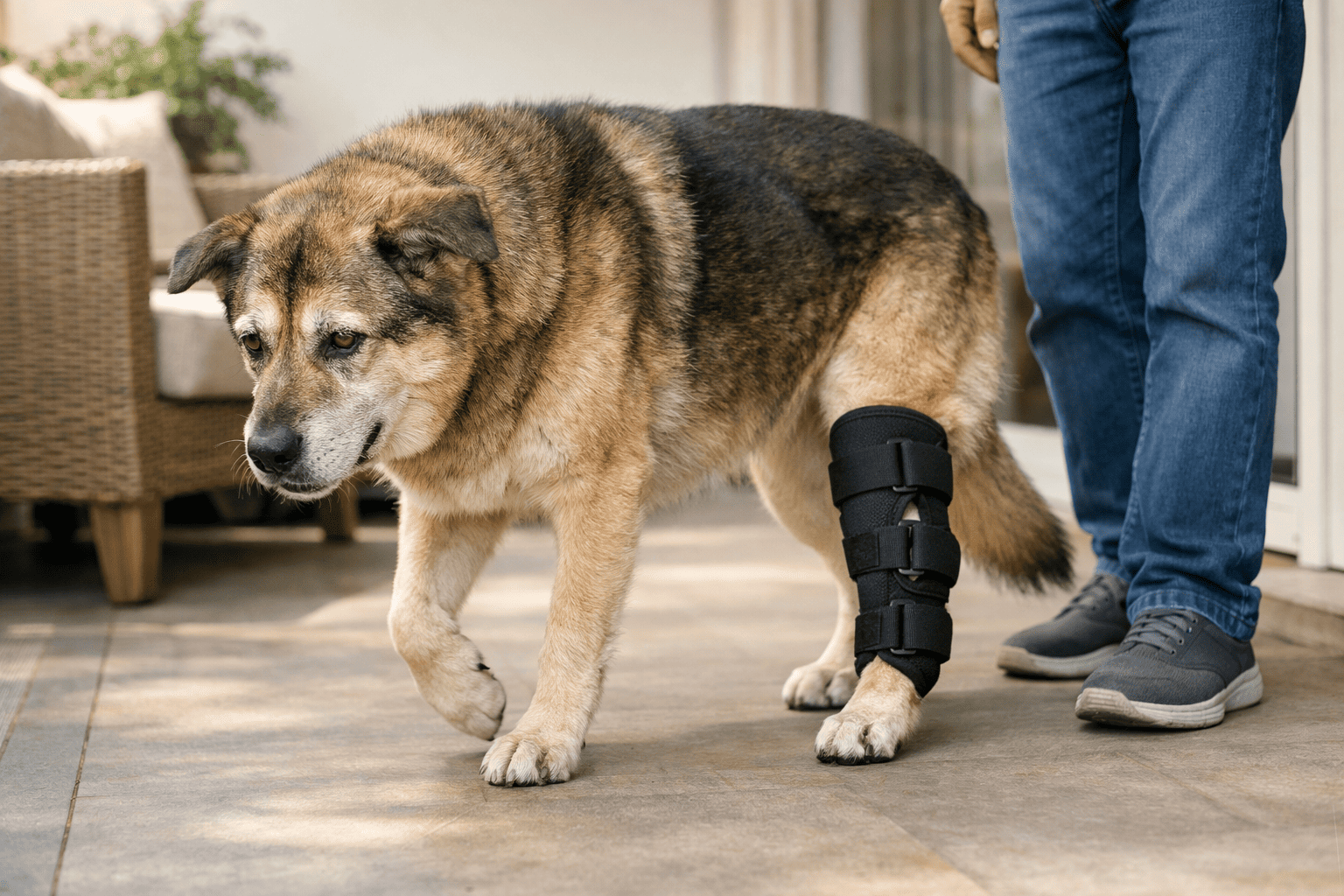
Arthritis, a common condition in senior dogs, causes joint pain, stiffness, and mobility challenges, often limiting activities like walking or playing. Knee braces and protective supports offer a practical solution, stabilizing joints, reducing pain, and boosting confidence for safer movement.
This article explores the benefits of knee braces for arthritic dogs, how to choose the right type, and tips for effective use. For complementary therapies, see hydrotherapy for dogs with arthritis: a safe and effective exercise option.
Why Use Knee Braces and Supports for Dogs with Arthritis?
Arthritis impacts a dog’s ability to move, turning simple tasks like walking or climbing stairs into painful challenges. Joint instability, pain, and inflammation can lead to compensatory postures, increasing the risk of secondary injuries.
- Stabilization: Knee braces provide essential support, reducing joint load and preventing awkward movements that worsen arthritis.
- Pain Relief: By limiting strain, they help alleviate discomfort during daily activities.
- Long-Term Benefits: Regular use can reduce pain over time, encouraging activity and improving emotional well-being.
- Example: A 12-year-old Labrador with knee arthritis walks more comfortably with a brace, avoiding further joint stress.
These tools help dogs regain confidence, making them more active and happier.
Types of Knee Braces and Supports Available
Different knee braces and supports cater to varying arthritis severity and dog needs.
- Basic Knee Braces: Lightweight and ideal for mild arthritis, offering gentle support without restricting movement (e.g., PetSafe Basic Knee Brace, sizes S–L).
- Adjustable Supports: Customizable for a tailored fit, perfect for dogs with changing needs or post-injury recovery (e.g., Ortho Dog Knee Brace, adjustable straps, sizes S–XL).
- Braces with Padding or Compression: Combine comfort and support, with padding to distribute pressure and light compression to reduce inflammation (e.g., Labra Dog Knee Brace, neoprene padding, sizes XS–XL).
- Tip: Choose high-quality materials like breathable neoprene or mesh to ensure comfort and durability.
- Example: A 40-pound dog with moderate arthritis benefits from a padded brace to reduce swelling during walks.
How to Choose the Right Brace or Support
Selecting the right knee brace ensures your dog’s comfort and mobility.
- Dog Size and Weight:
- Measure your dog’s leg circumference and length for a snug fit—neither too tight nor loose.
- Adjustable models suit dogs with weight fluctuations (e.g., Ortho Dog adjusts for 10–100 lbs).
- Consult Your Veterinarian:
- A vet can assess joint health and recommend the best brace type, especially for severe arthritis or post-surgery needs.
- Tip: Pair with other tools like those in 6 useful tools to improve mobility in dogs with arthritis.
- Check Material Quality and Fit:
- Opt for soft, breathable, durable materials to prevent irritation.
- Ensure secure closures (e.g., Velcro) keep the brace in place during movement.
- Example: A 60-pound dog with a 12-inch leg circumference fits a size M Labra brace, adjusted for a secure fit.
Benefits of Using Knee Braces and Supports
Knee braces offer significant advantages for arthritic dogs.
- Joint Pain Relief During Everyday Activities:
- Reduce strain, easing pain during walks, climbing, or standing.
- Example: A brace helps a dog climb stairs without wincing from knee pain.
- Preventing Condition Worsening:
- Stabilized joints lower the risk of further injury or compensatory issues in muscles or other joints.
- Tip: Combine with a support vest for added stability—see benefits of using support vests for dogs with arthritis.
- Improved Mobility and Confidence:
- With reduced discomfort, dogs move more freely, restoring independence and encouraging interaction.
- Example: A 50-pound dog regains confidence to play fetch after using a brace for two weeks.
These benefits enhance both physical health and emotional well-being, making braces a key part of arthritis care.
How to Introduce Knee Braces and Supports into Your Dog’s Routine
Introducing a knee brace requires patience to ensure your dog adapts comfortably.
- Steps to Help Your Dog Adjust:
- Let your dog sniff and explore the brace before fitting it.
- Start with short sessions (5–10 minutes) while supervising, gradually increasing to 30 minutes daily.
- Positive Reinforcement Tips:
- Reward with treats, praise, or play for calm behavior while wearing the brace.
- Example: Offer a favorite treat after a 10-minute session to build positive associations.
- Watch for Discomfort and Make Adjustments:
- Observe for odd movements, attempts to remove the brace, or skin redness.
- Adjust fit if pressure marks appear, ensuring the brace isn’t too tight.
- Tip: Use during low-stress activities like short walks to ease the transition.
Care and Maintenance of Knee Braces and Supports
Proper care ensures the brace remains effective and safe.
- Clean Regularly to Prevent Skin Irritation:
- Wash with mild soap and water to remove dirt, fur, and moisture (e.g., Ortho Dog braces are hand-washable).
- Dry thoroughly before reuse to avoid bacterial growth.
- Check for Wear and Tear:
- Inspect weekly for frayed straps, loose stitching, or worn padding.
- Example: Replace a brace if Velcro no longer secures properly after six months.
- When to Replace the Brace:
- Replace if it no longer fits, shows significant wear, or if your vet recommends a different model.
- Tip: Store in a dry place to maintain material integrity.
Frequently Asked Questions
How long should my dog wear a knee brace daily?
Start with 15–30 minutes, increasing to 1–2 hours during activity, but remove during rest—consult your vet.
Can knee braces be used with other arthritis aids?
Yes, they pair well with hydrotherapy, support vests, or ramps for comprehensive care.
What if my dog refuses to wear the brace?
Introduce slowly with treats, adjust fit for comfort, and consult a vet if resistance persists.
Conclusion
Knee braces and protective supports, like the Ortho Dog Knee Brace or Labra Dog Knee Brace, are powerful tools for enhancing the lives of dogs with arthritis. They reduce pain, stabilize joints, and encourage mobility, leading to a happier, more active pet.
With the right brace, a gradual introduction, and proper care, your dog can regain confidence and comfort. Always consult a veterinarian to ensure the best fit and results for your pet’s unique needs. Share your experience with knee braces in the comments!